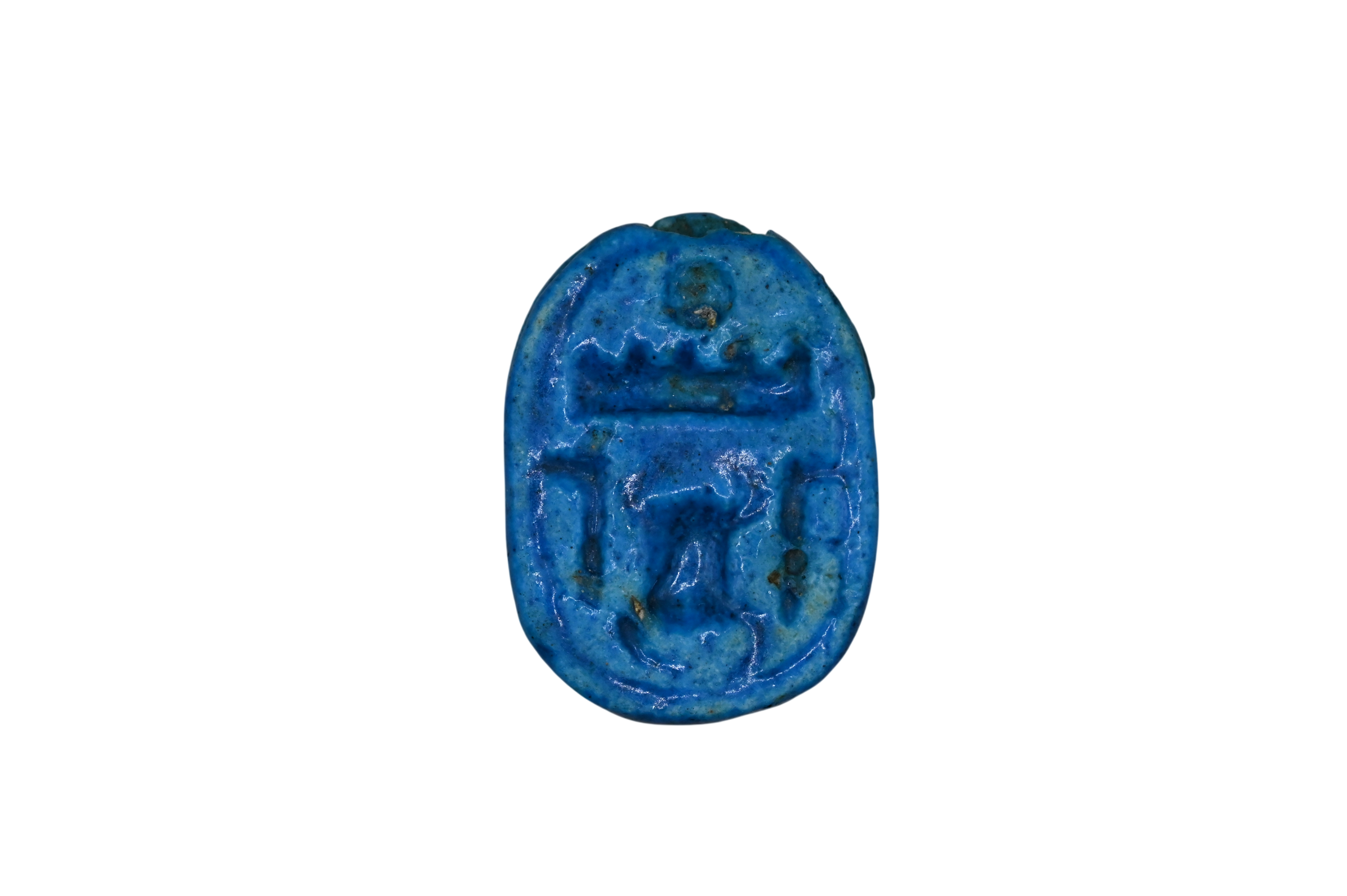
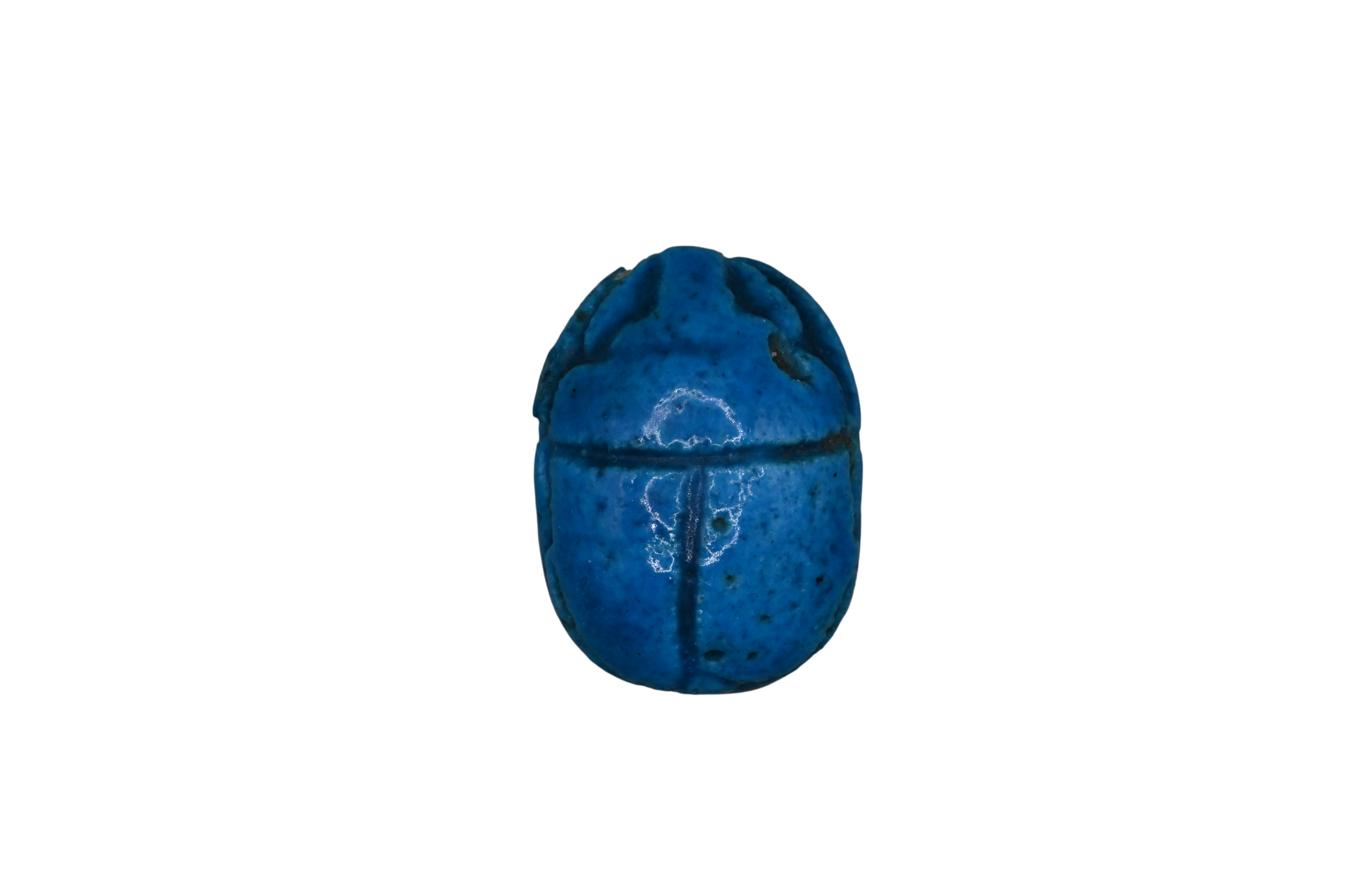
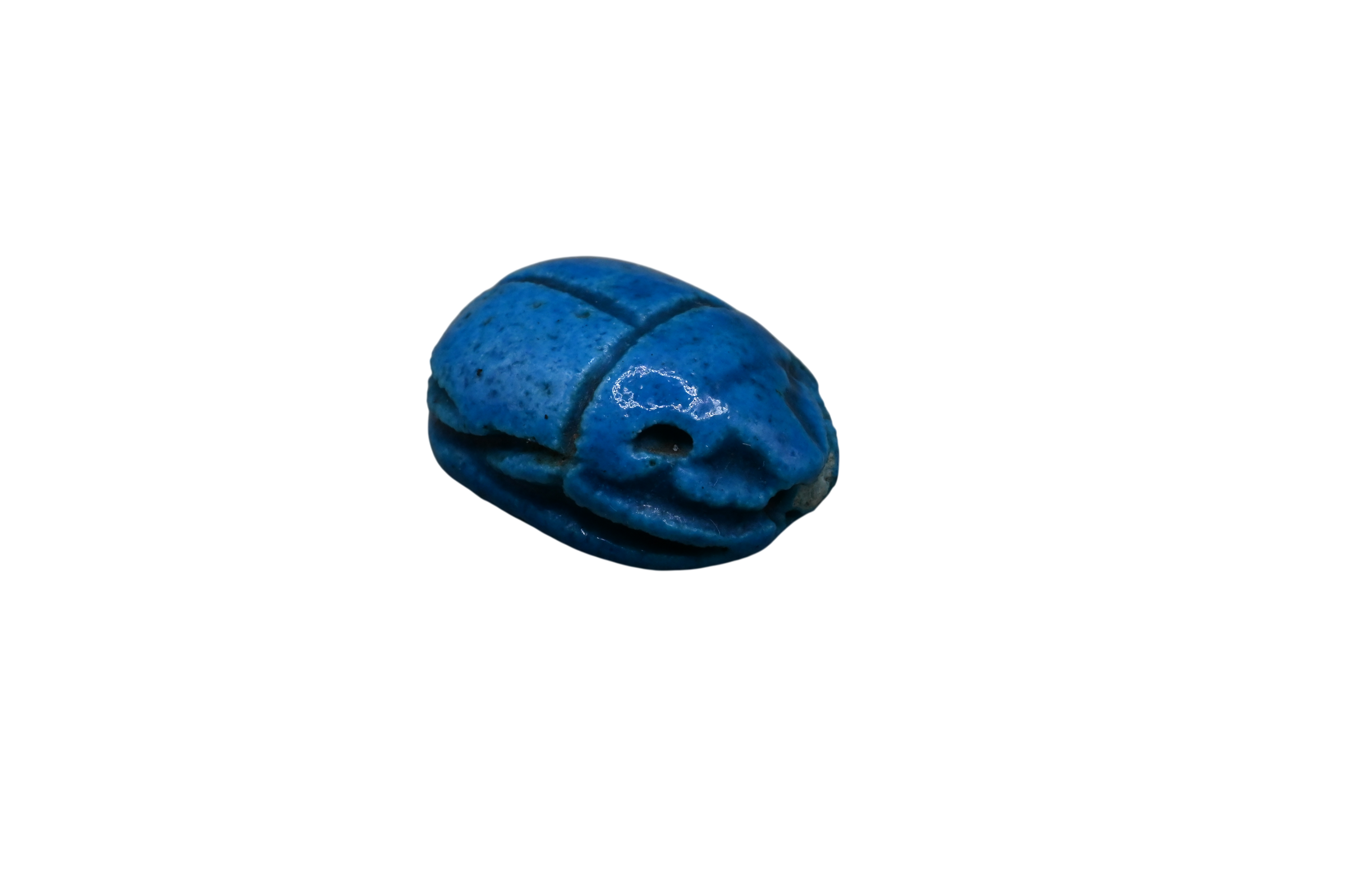
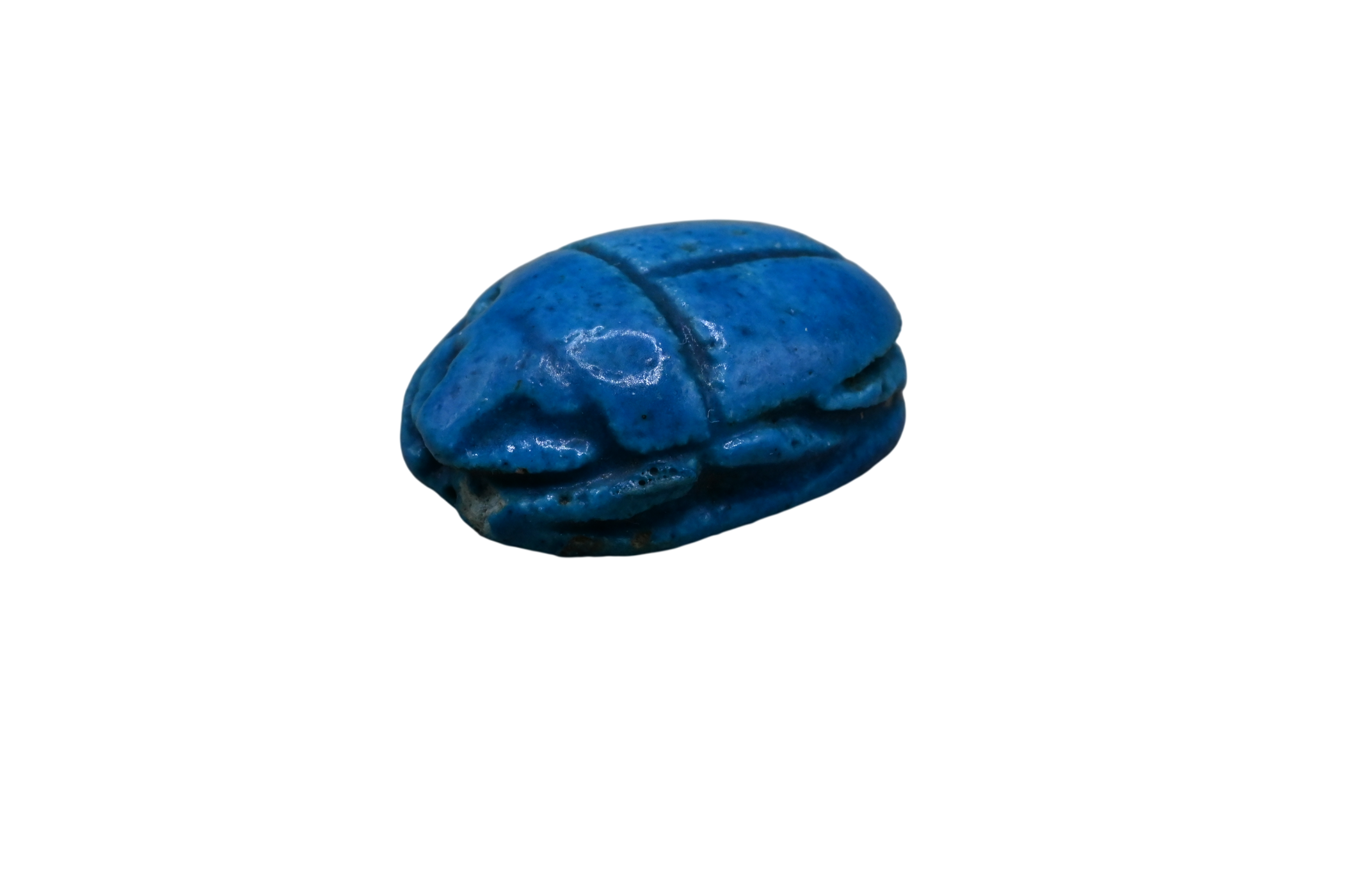
Blue faience scarab of Thutmose III
Culture
Egyptian, 18th dynasty, 1390 – 1352 BC
Size
2,7 cm
Provenance
Dutch private collection, bought via Bonhams Auctions in London.
Bodo Bless (1940-2022) collection, Berlin, formed from 1960s.
Description
This bright blue faience scarab is inscribed on the base with the throne name of Thutmose III, Menkheperre (mn-hpr-re). Furthermore, left and right a mirrored ntr-sign which translated to ‘god’.
Scarabs were small amulets shaped like the dung beetle, which the Egyptians saw as a powerful symbol of life, protection, and rebirth. The dung beetle rolls a ball of dung across the ground, and the Egyptians likened this to the sun god Ra rolling the sun across the sky each day.
Scarabs were worn as jewelry, carried as talismans, and placed in tombs. They were believed to protect the living from harm and guide the dead safely into the afterlife. Many scarabs were inscribed with names of pharaohs, prayers, or protective spells. Officials used them as personal seals pressed into clay or wax. Some had purely decorative or symbolic inscriptions, while others carried political or diplomatic messages. They were made from a wide range of substances: steatite (soapstone), faience (glazed ceramic), carnelian, lapis lazuli, and even precious metals.
Translation by Dutch Egyptologist Huub Pragt.
Condition
Excellent condition, tiny chip near the head of the scarab.
Parallel
www.metmuseum.org/art/collection/search/551419
www.imj.org.il/en/collections/593514-0
www.imj.org.il/en/collections/665889-0
Price
€ 1900