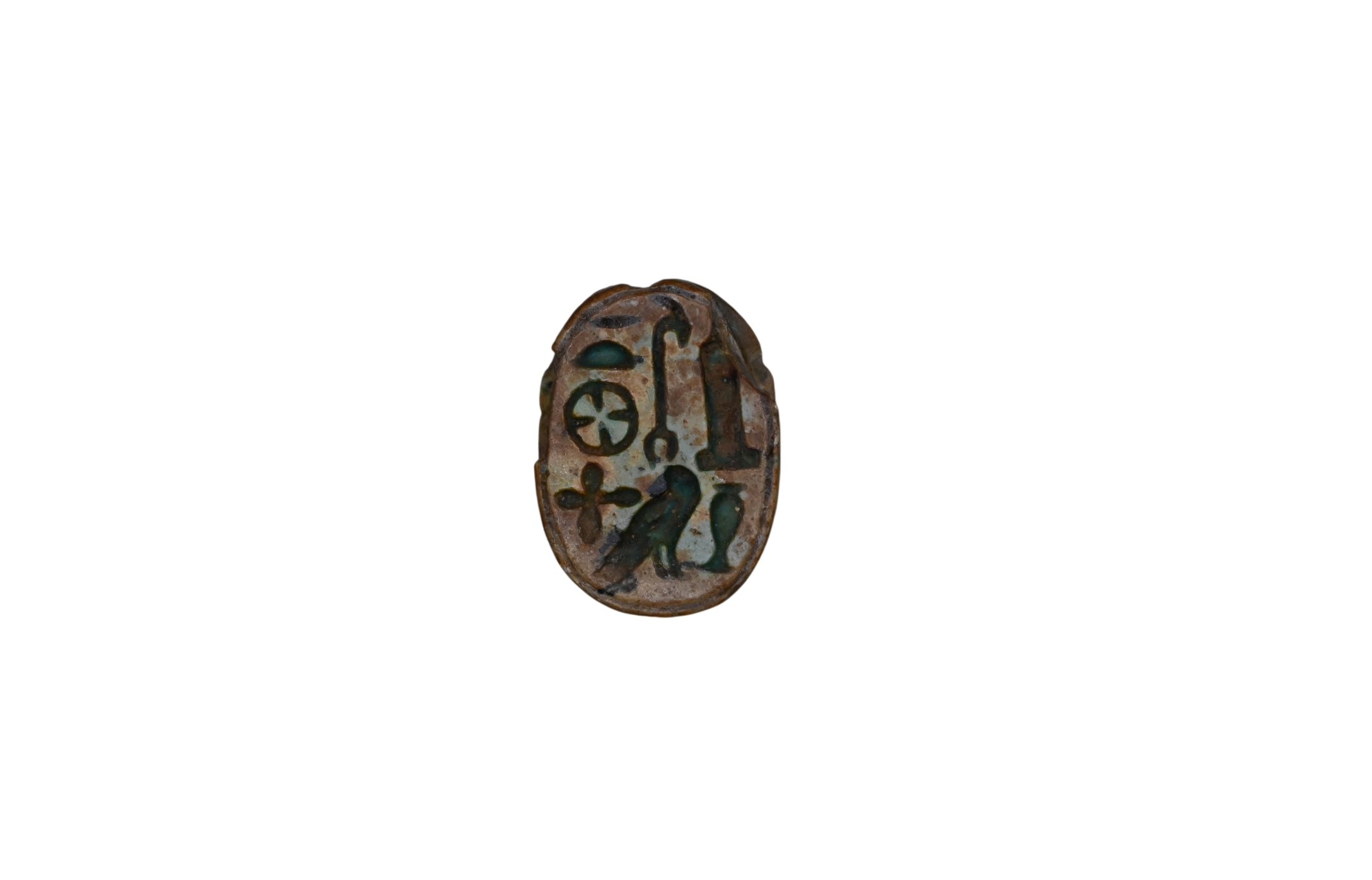
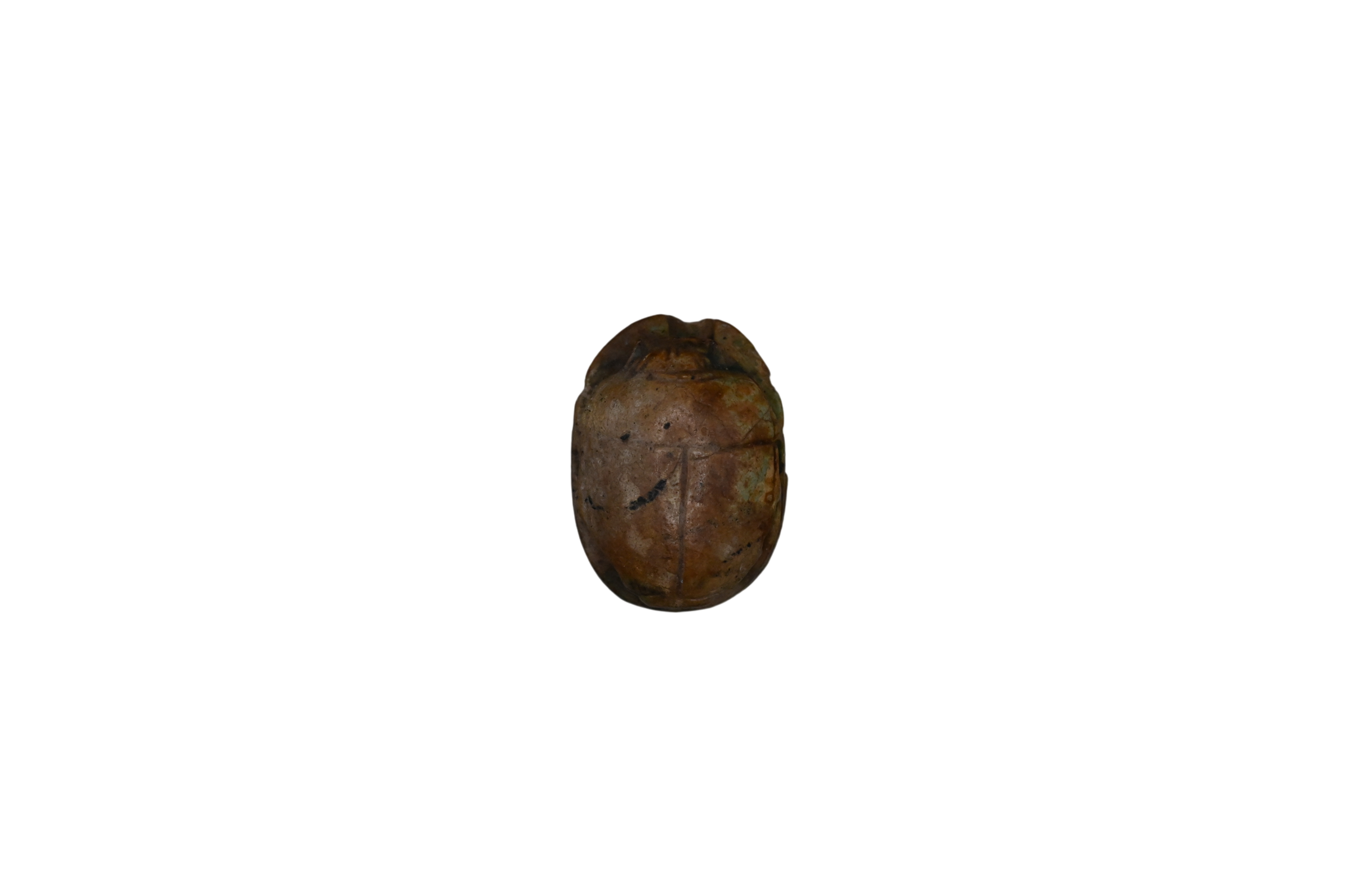
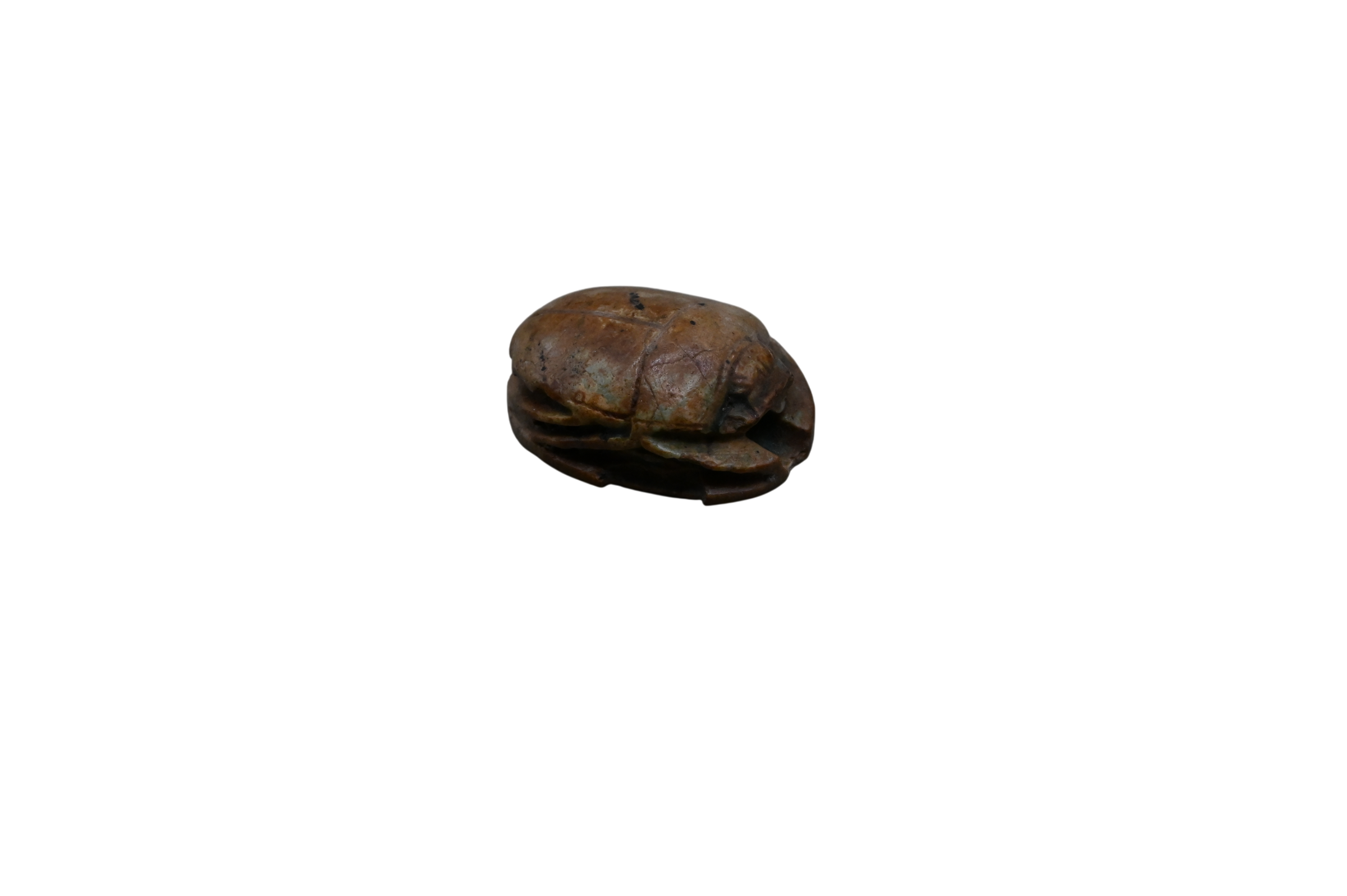
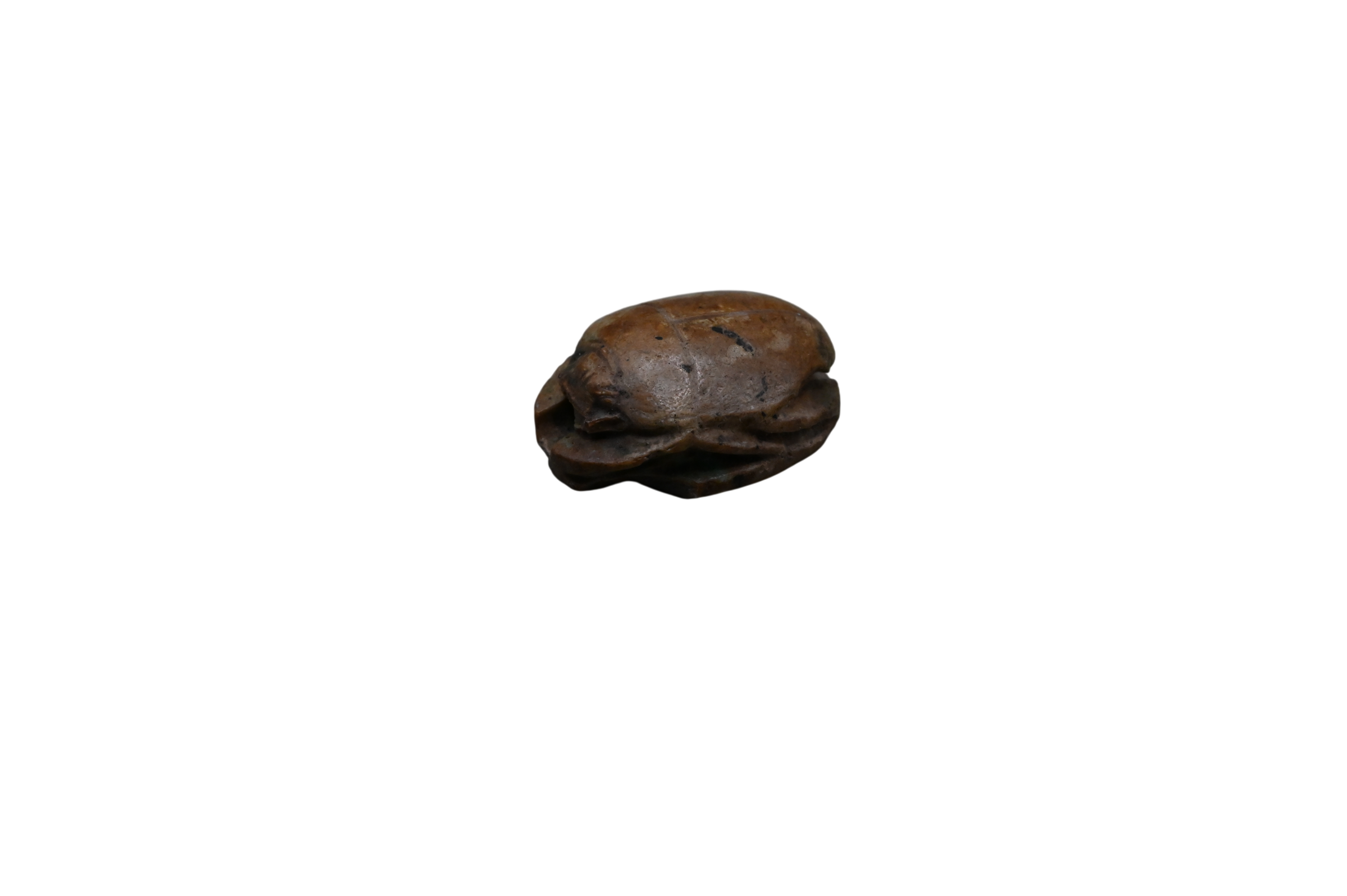
Scarab with blessing formula of the city of Thebes
Culture
Egyptian, (Late) New Kingdom – Third Intermediate Period (1100 – 650 B.C.)
Size
1,7 cm
Provenance
Dutch private collection, bought via Bonhams Auctions in London.
Bodo Bless (1940-2022) collection, Berlin, formed from 1960s.
Description
This scarab calls for the protection of the sun god Amun, hence the obelisk. The hieroglyphs next to it form the ancient Egyptian name of Thebes (Was(e)t) where his main cult center was located. The entire inscription bestows a blessing upon the owner of the seal-amulet, saying that he will be granted a favor of Amun when he is in Thebes.
Scarabs were worn as jewelry, carried as talismans, and placed in tombs. They were believed to protect the living from harm and guide the dead safely into the afterlife. Many scarabs were inscribed with names of pharaohs, prayers, or protective spells. Officials used them as personal seals pressed into clay or wax. Some had purely decorative or symbolic inscriptions, while others carried political or diplomatic messages. They were made from a wide range of substances: steatite (soapstone), faience (glazed ceramic), carnelian, lapis lazuli, and even precious metals.
Translation available by Dutch Egyptologist Huub Pragt.
Condition
Good condition, tiny chip in corner base near the obelisk.
Parallels
www.metmuseum.org/art/collection/search/558696
www.imj.org.il/en/collections/604405-0
www.imj.org.il/en/collections/598372-0
Price