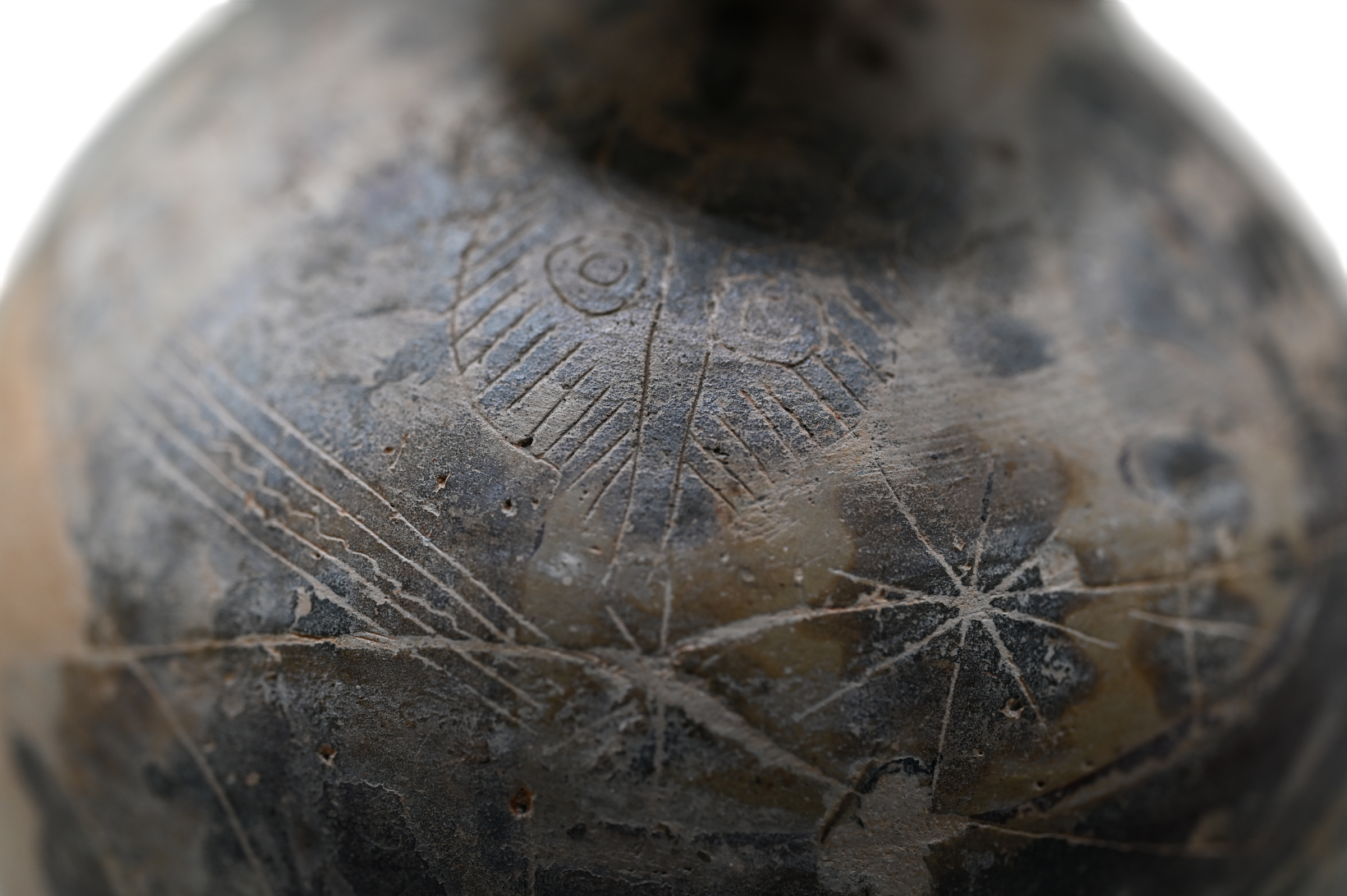
Ex private collection in Northern Germany, inherited through the mother from the grandfarther’s former collection. Acquired in the early 1980s on the Northern German art market. With German export license.
Description
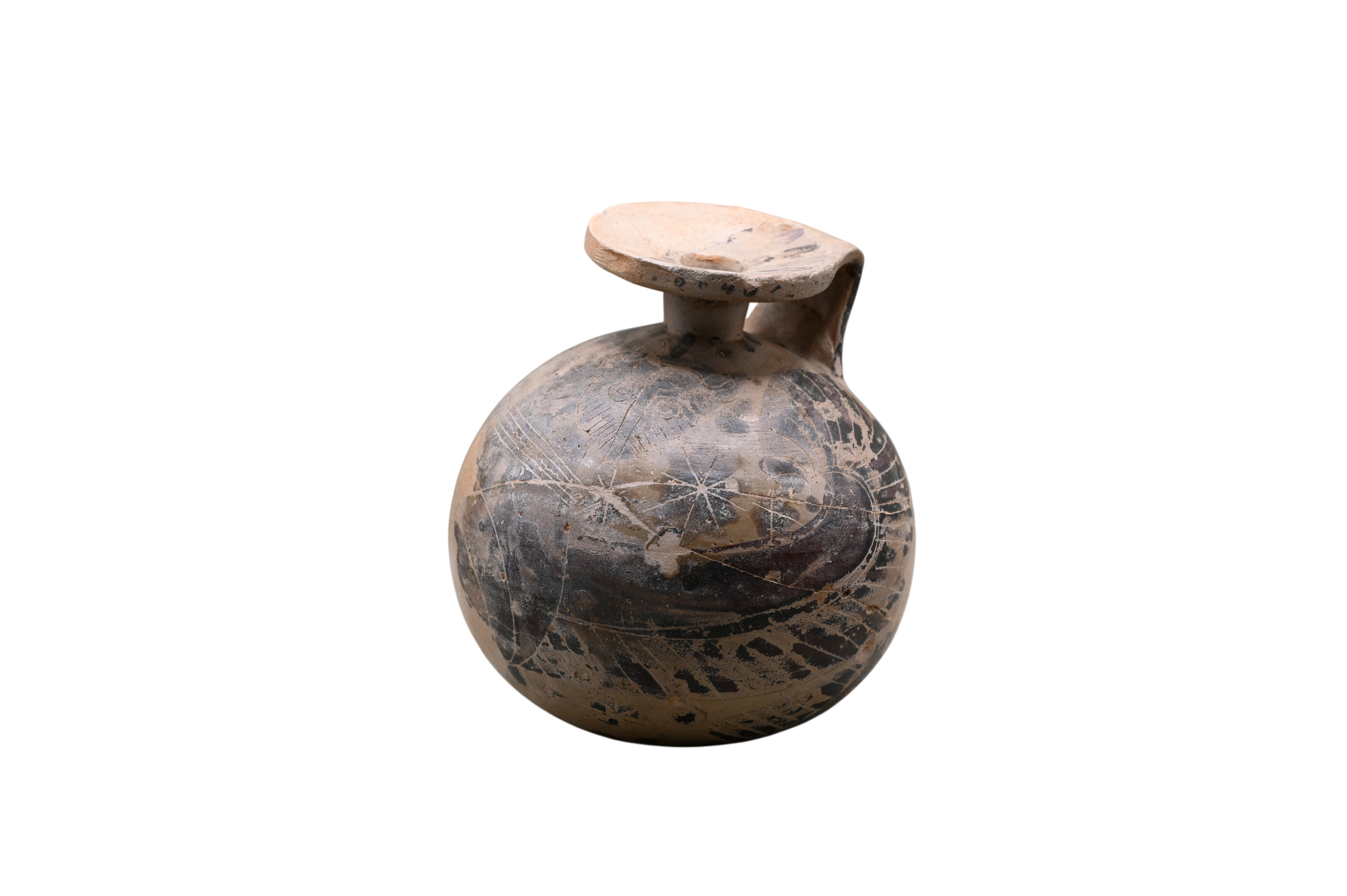
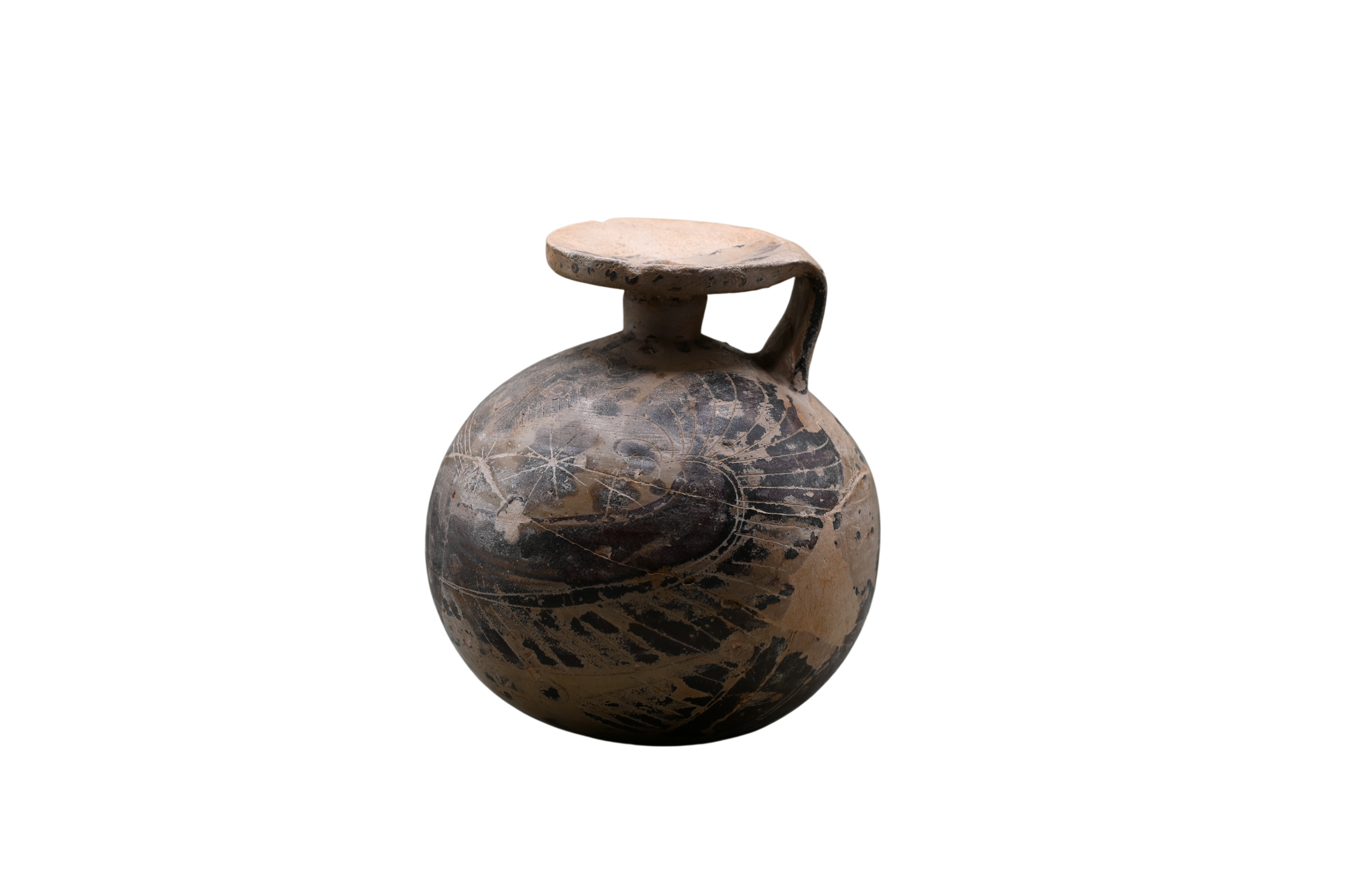
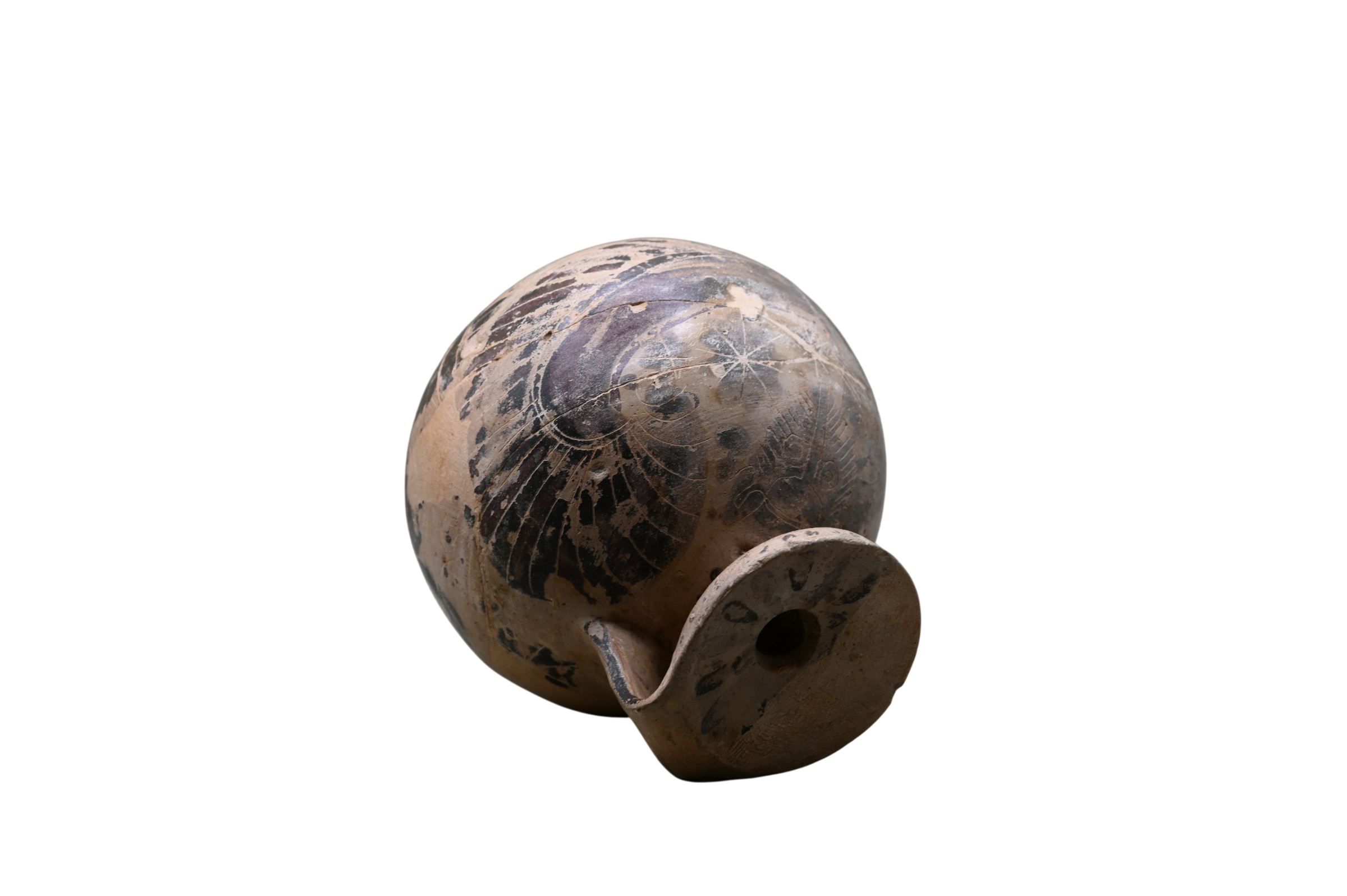
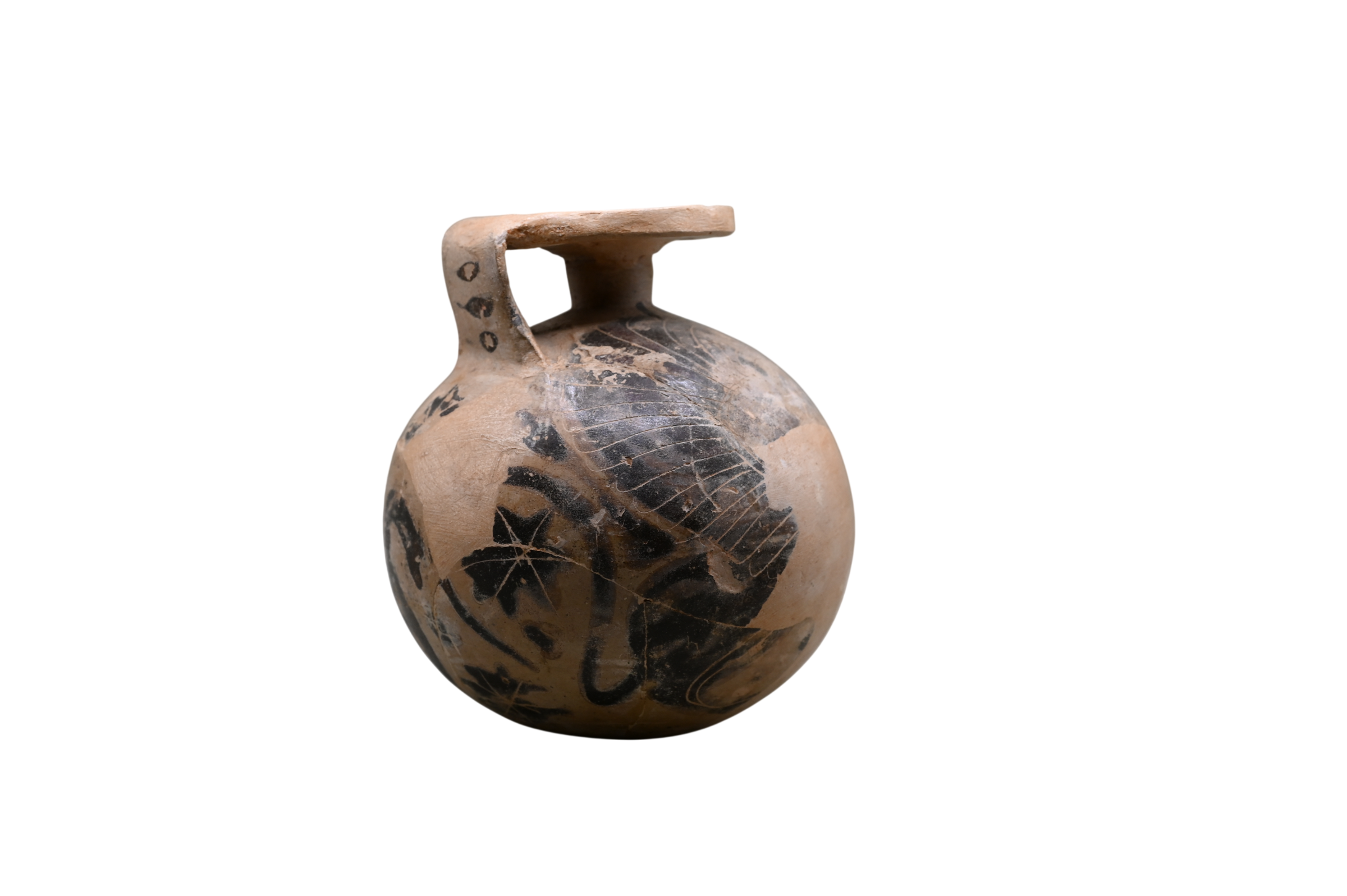
A rather large Etruscan-Corinthian globular aryballos with a sphinx body with lion head and a swan.
An aryballos is a small, round vessel used in ancient Greece to hold perfumed oil or ointments. Athletes commonly used them in the gymnasium: they would carry an aryballos tied to a cord, pour out oil, and rub it on before exercise or bathing. The shape is usually globular or ovoid, with a narrow neck and small opening to control the flow of oil.
Etrusco-Corinthian pottery refers to a style of painted vases produced in Etruria (modern-day Italy) between roughly 630 and 550 B.C.E. These vessels imitate the black-figure technique, shapes, and animal-style imagery of Greek Corinthian pottery.
Condition
Assembled from fragments, areas have been repaired professionally without using paint.