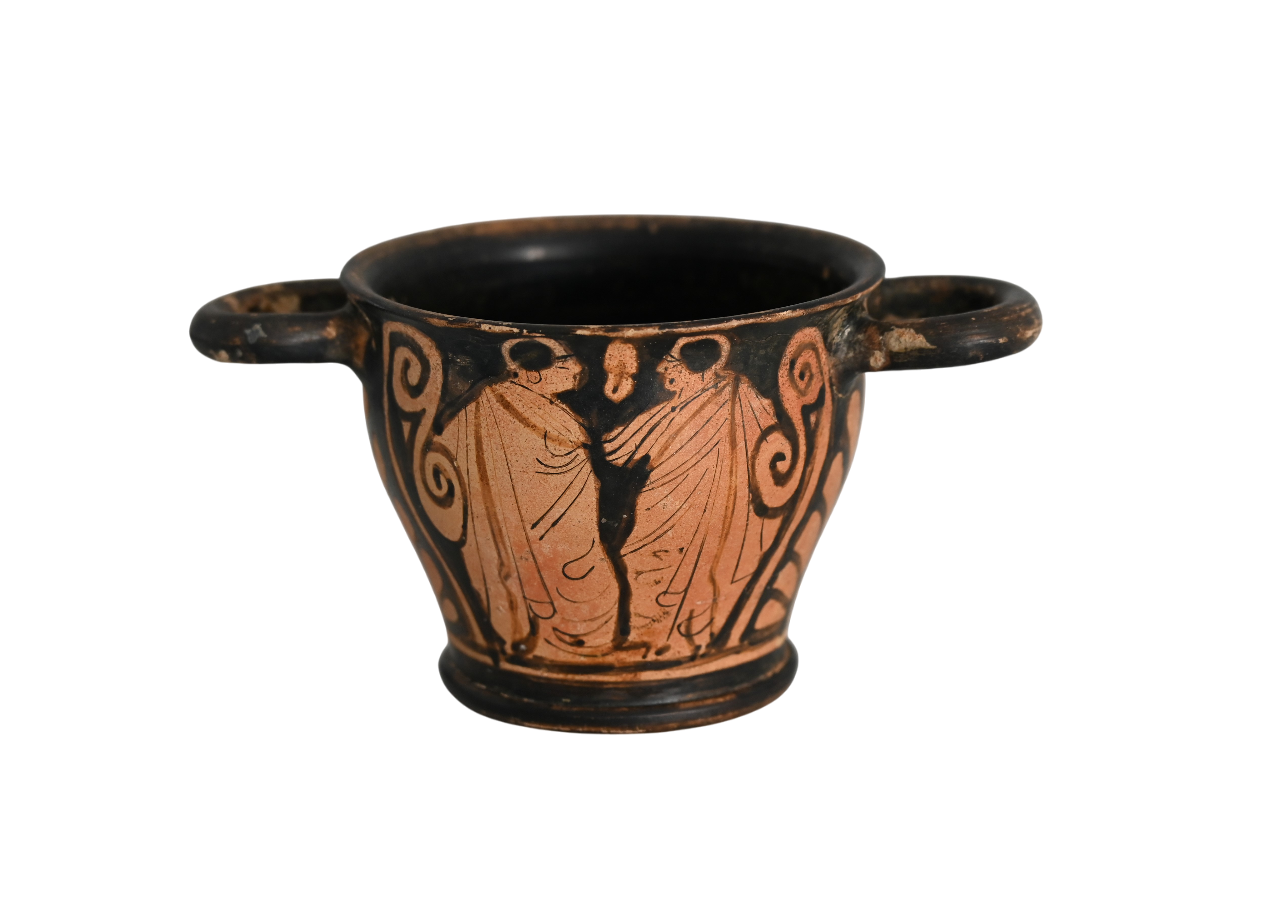
Attic red-figure skyphos with youths – Fat Boy Group
Culture
Greek, Attica, c. 375-350 BC
Size
7 cm
Provenance
Dutch collection. Ex Gorny & Mosch, with German export license.
Ex private collection G.S. Niedersachsen, Germany.
Ex German private family collection.
Description
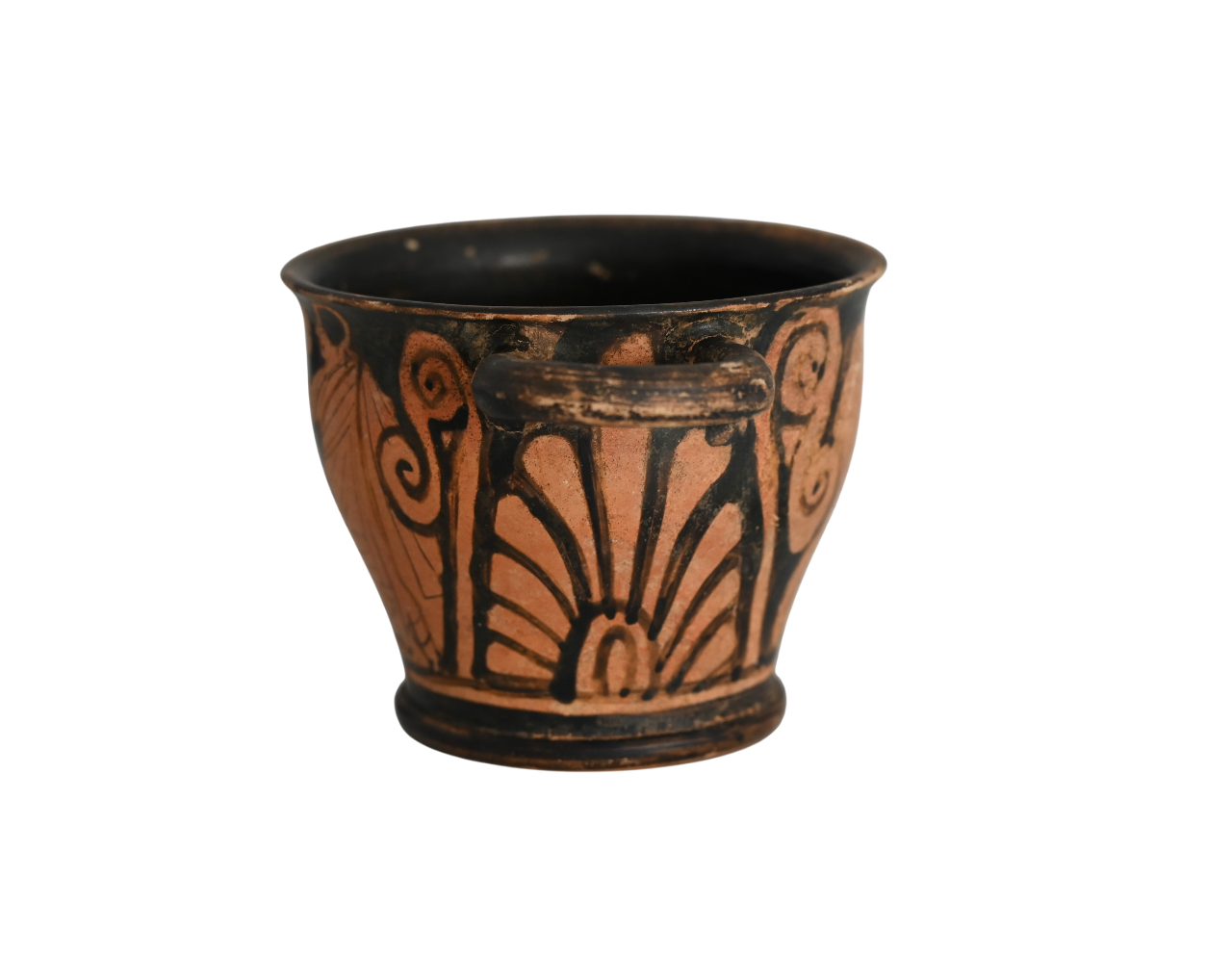
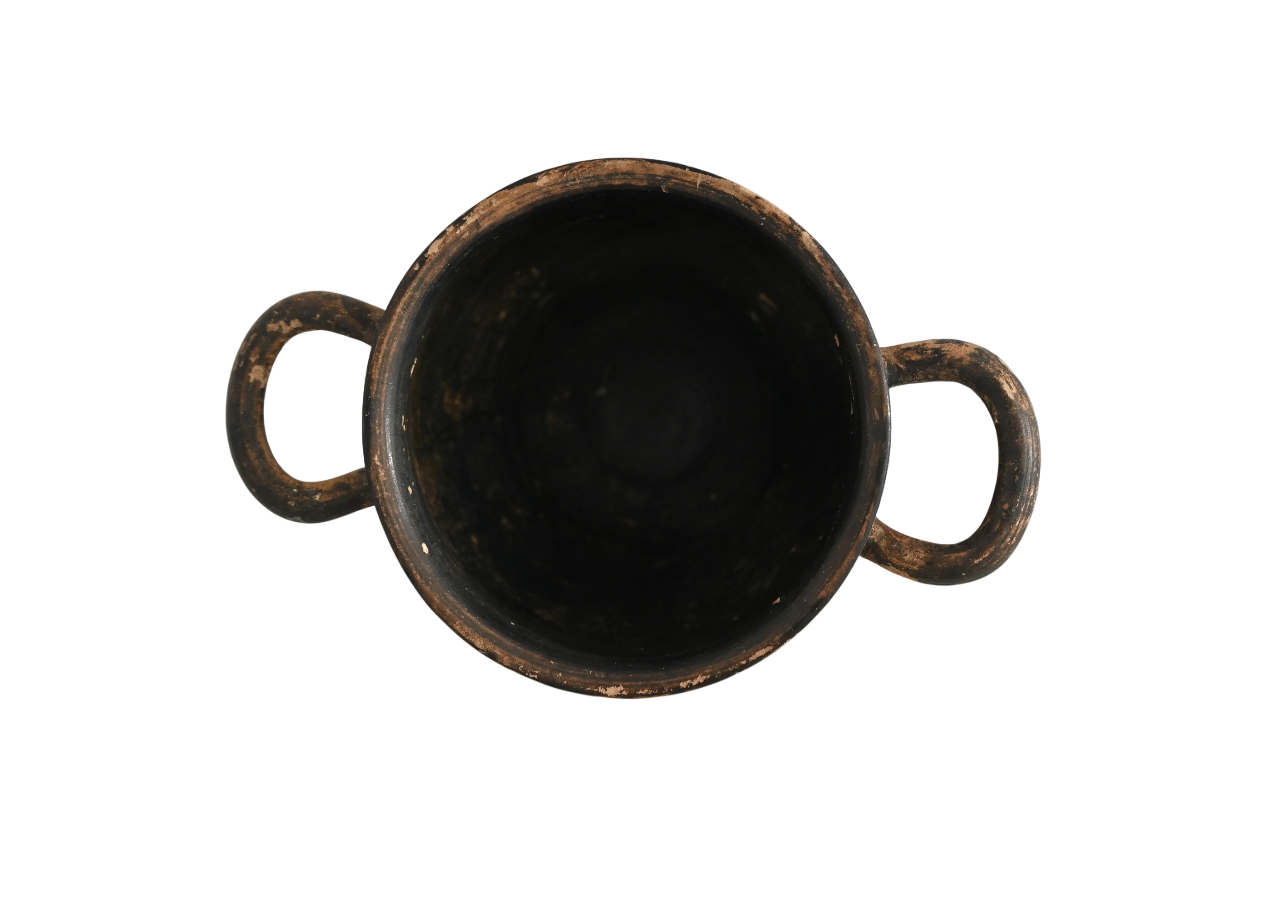
Skyphos of Attic type, with walls sagging towards the bottom, an outturned rim, two horizontal
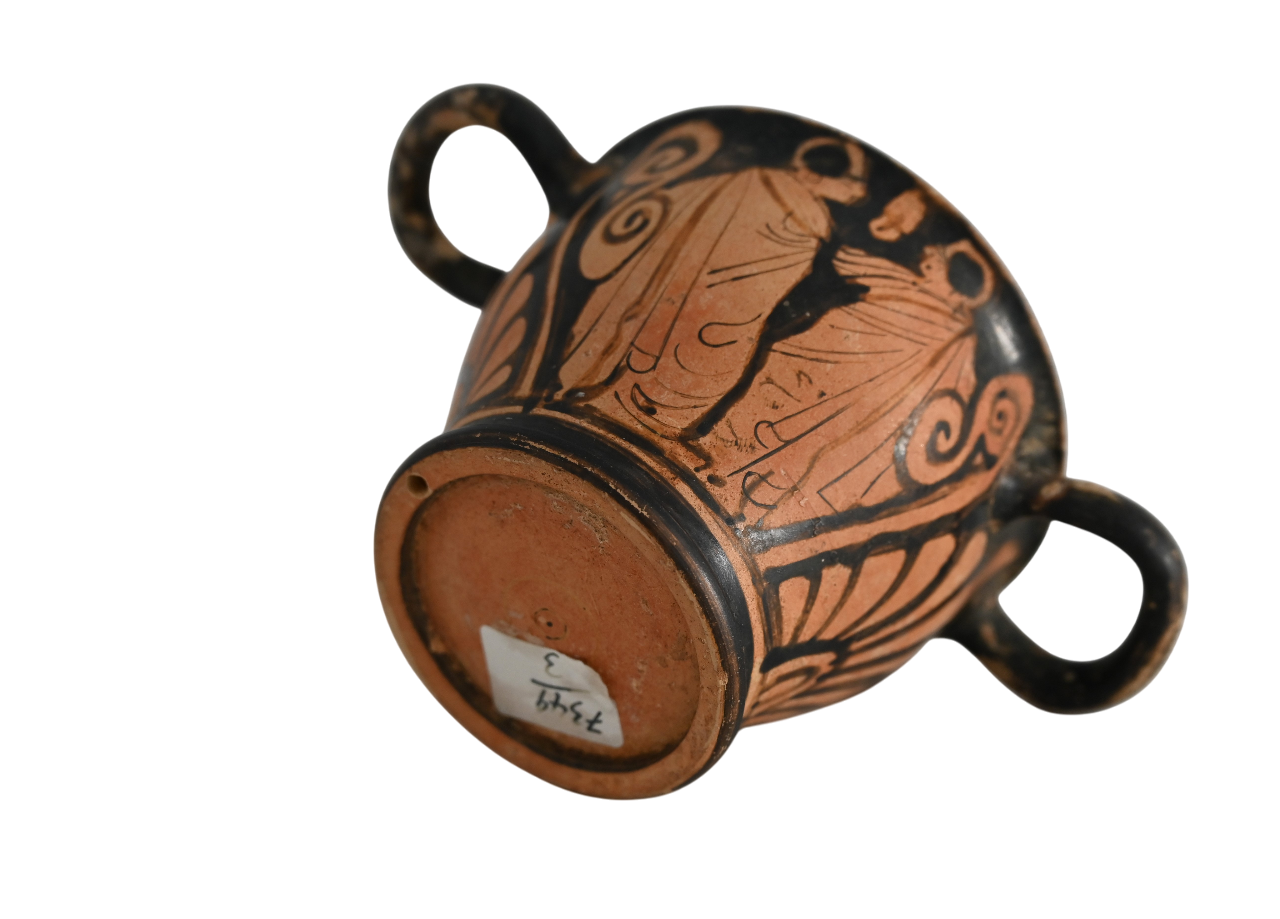
handles of round section set slightly upwards, and a rounded foot with a raised edge. The clay is
light brown and fine, without visible inclusions. The black glaze, applied with brown spots, covers
the handles, the interior and the lower part of the body; the resting surface and the underside are
reserved.
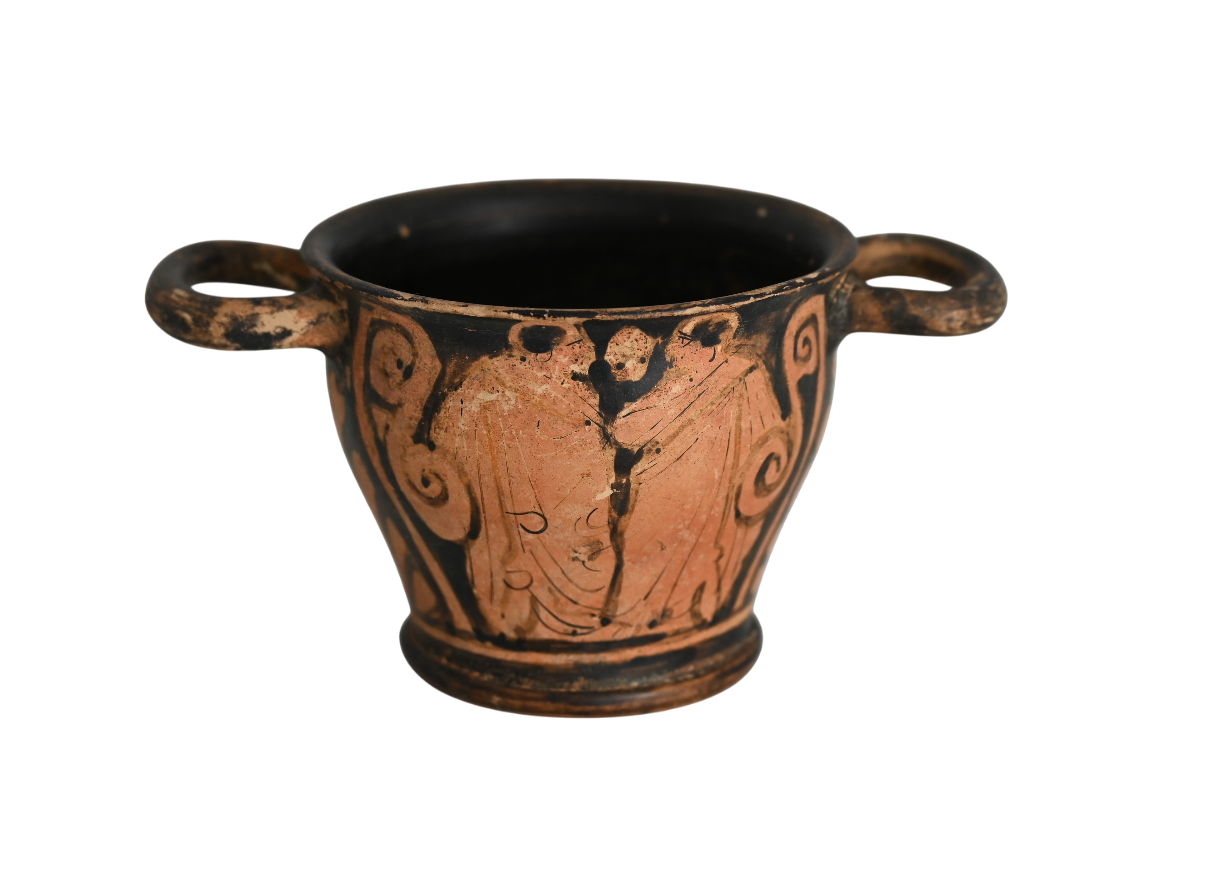
Both sides carry the same scheme. Two youths draped in himatia stand facing each other, their
hands muffled in the cloth, the drapery rendered with a few long, fluent lines and a heavy fold
falling from the shoulder. Between their heads hangs a round object, probably a tympanum.
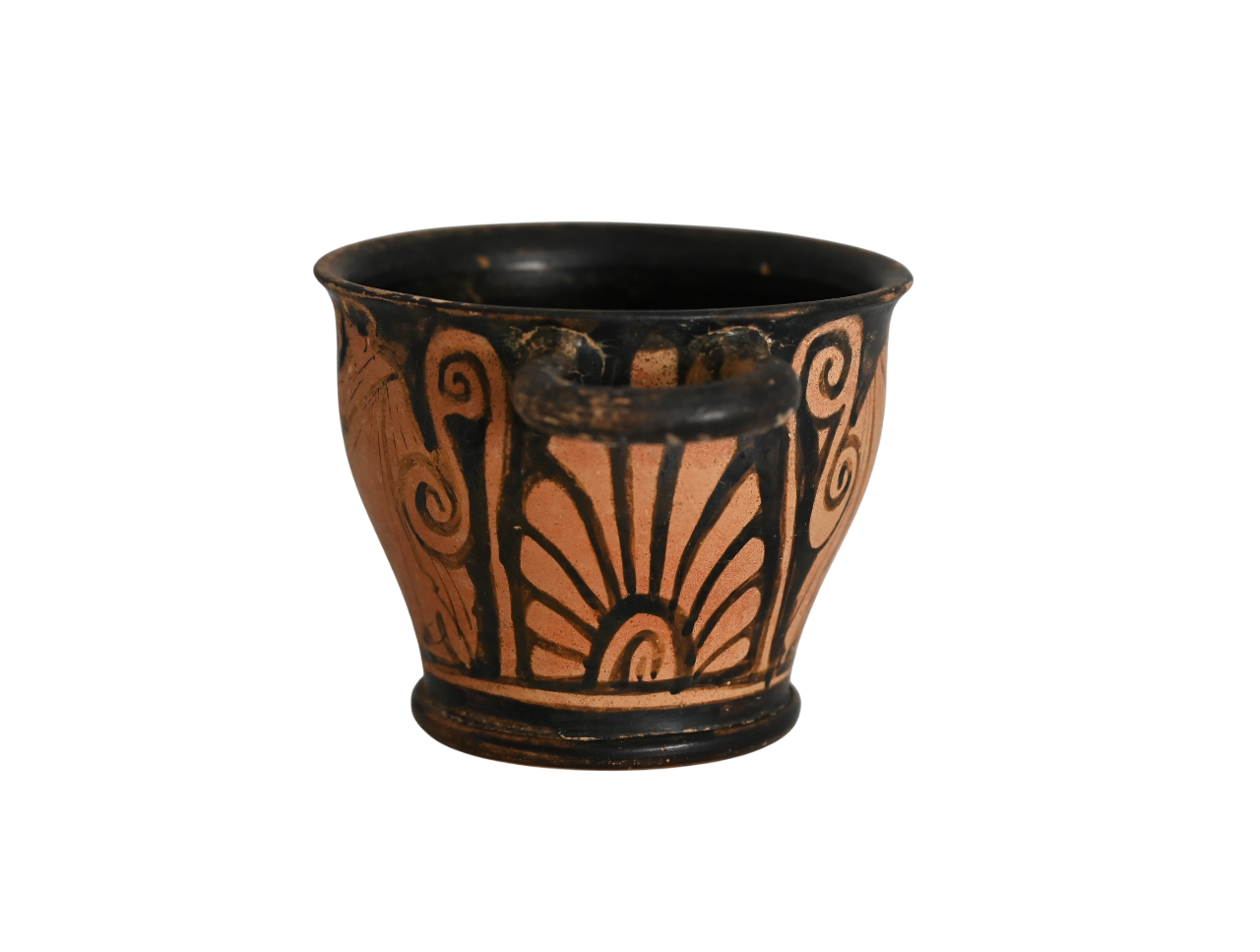
Beneath the handles are palmettes, flanked by volutes and tendrils that rise at either side of the
handle roots.
Red-figure pottery is essentially the successor to black-figure pottery and represents a major leap in Greek ceramic art. In red-figure pottery, the background is painted black while the figures themselves remain the natural red color of the clay, so Red-figure pottery reverses the black-figure method. Potters then add details with brushstrokes rather than incising them, which allows for more naturalistic and flexible depictions of anatomy, clothing, and expressions. Red-figure had some advantages over black-figure painting: it was possibly to gain greater detail and more complex and expressive poses.
Positive Thermoluminescence test.
Attributed to the Fat Boy Group. Verified by an archaeologist specialised in the field. Detailed report included.
Condition
Good condition, the youths on side B are slightly faded in comparison to side A.
Price
€ 1850