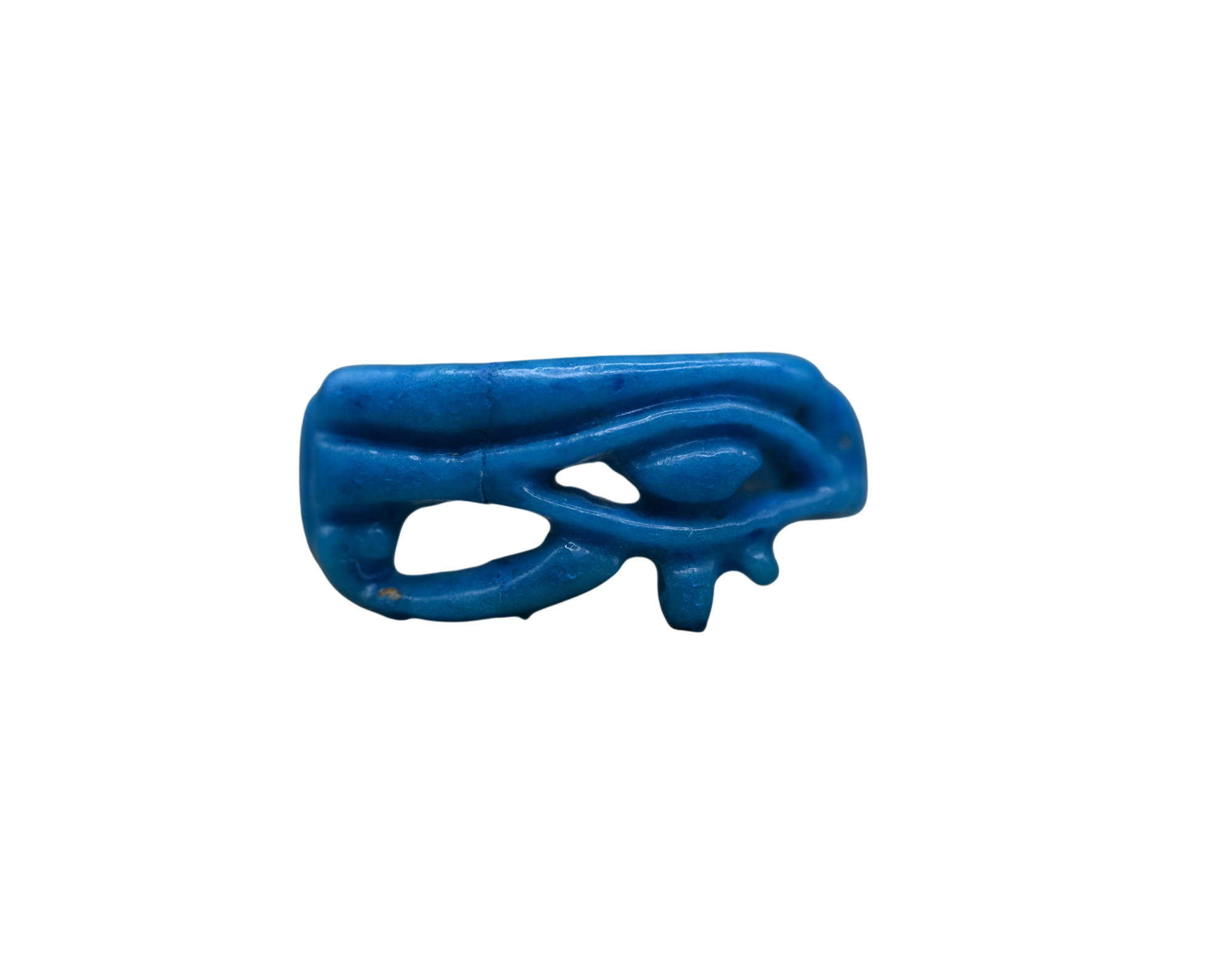
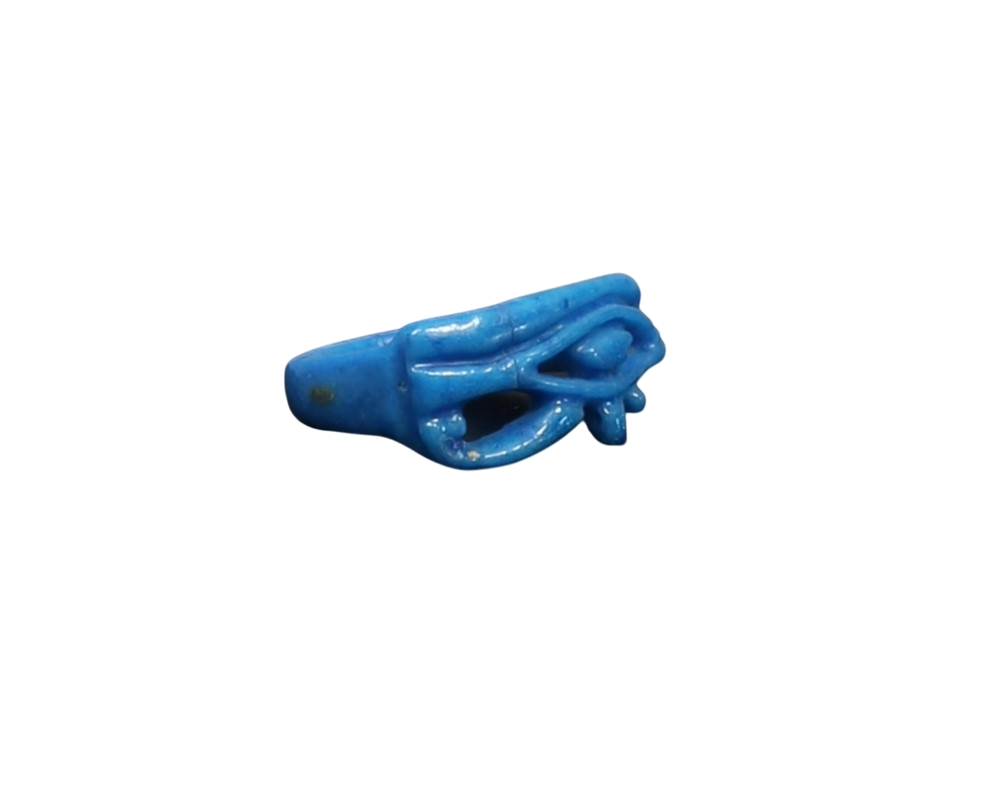
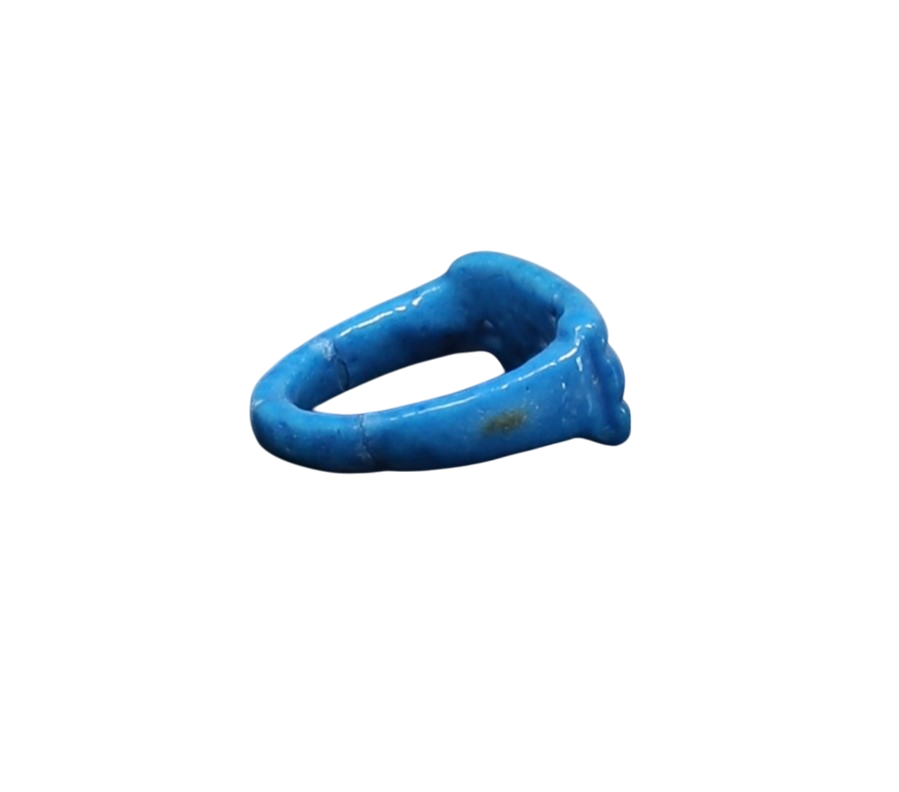
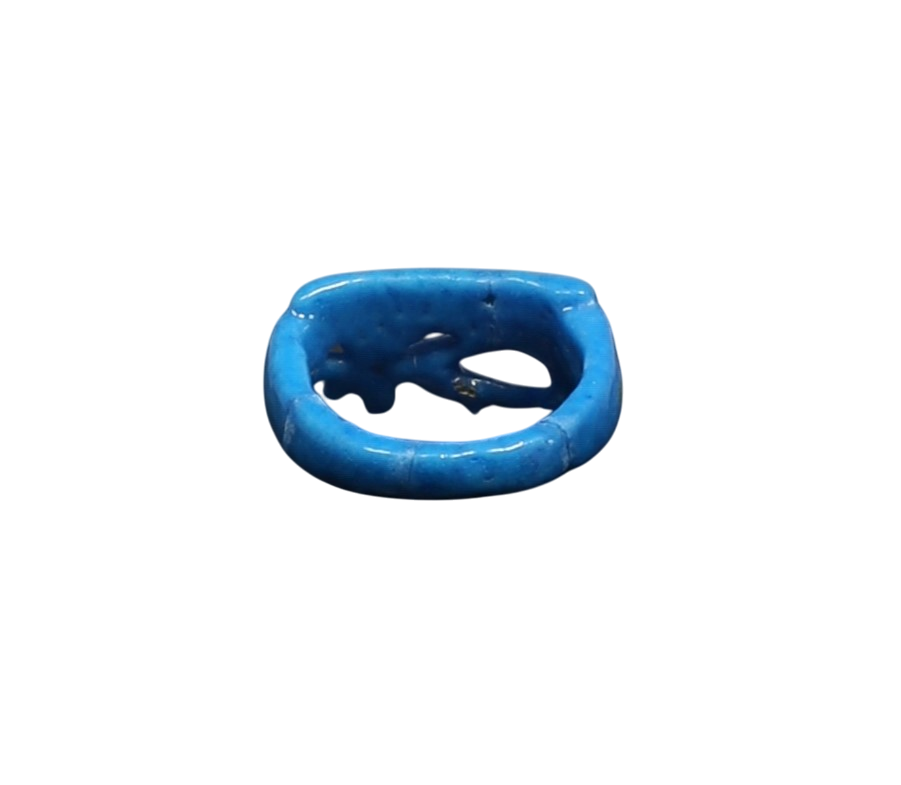
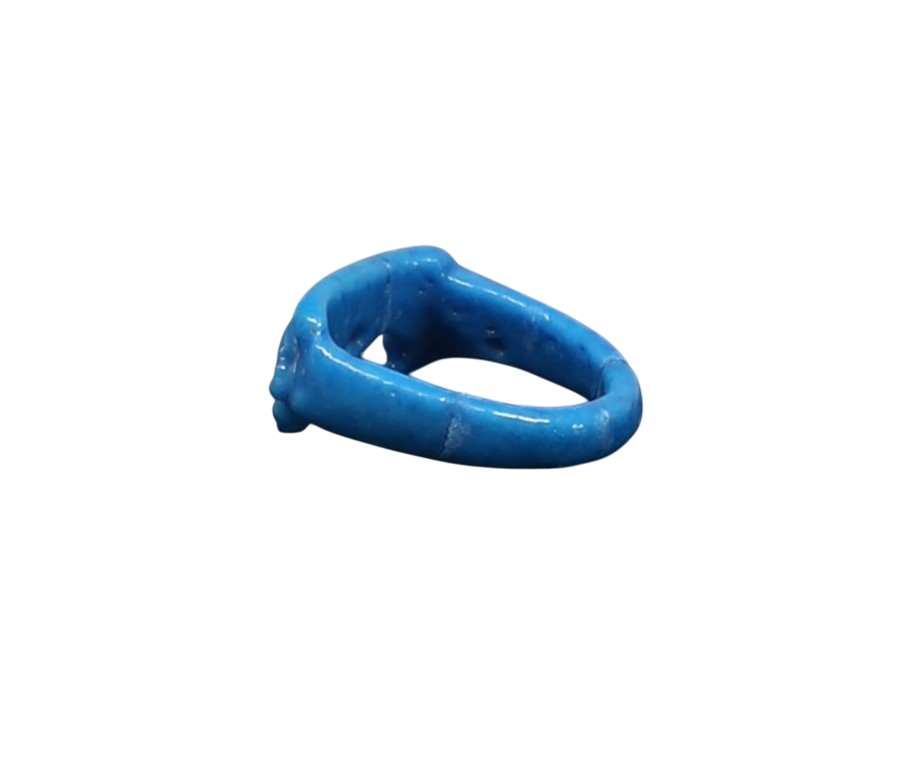
Blue faience Eye of Horus ring
Price
€ 2100
Description
Blue Faience Eye of Horus ring, also know as a Wedjat eye ring.
The wedjat eye represents the healed eye of the god Horus. It depicts a combination of a human and a falcon eye, since Horus was often associated with a falcon. Its ancient Egyptian name, wedjat, means "the one that is sound (again)." In Egyptian mythology Horus’ eye was injured or stolen by the god Seth and then restored by Thoth. The wedjat eye embodies healing power and symbolizes rebirth. An amulet or ring in this shape was thought to protect its wearer and to transfer the power of regeneration onto him or her.
Comparable:
www.metmuseum.org/art/collection/search/551383
www.liverpoolmuseums.org.uk/artifact/finger-ring-40
www.liverpoolmuseums.org.uk/artifact/finger-ring-153
www.britishmuseum.org/collection/object/Y_EA2977
www.britishmuseum.org/collection/object/Y_EA59315
www.liverpoolmuseums.org.uk/artifact/finger-ring-27
Culture
Egyptian
Dating
New Kingdom, 18th Dynasty, 1550-1295 B.C. Amarna period.
Size
2,1 cm
Provenance
Dutch private collection.
Private collection D. van Bommel (author www.ushabtis.com) since 2014, the Netherlands. Bought at BAAF Brussel.
Alexander Ancient Art, the Netherlands
Goddard & Josephine Dubois Collection (bought between 1900-1907 in Egypt).
Publication
DiVino, Le antiche terre dell'Egitto e del Monferrato regni della cultura del vino, Italy, 2015 (digital copy available)
Exhibited
Museum of Man, San Diego, California, USA, 1968 (documentation regarding loan to museum available dating from 1968)
Casale Monferrato EXPO 2015, Italy (pictures of expo available).
Condition
Great condition, the blue color still very much blue. Broken and repaired (shank).