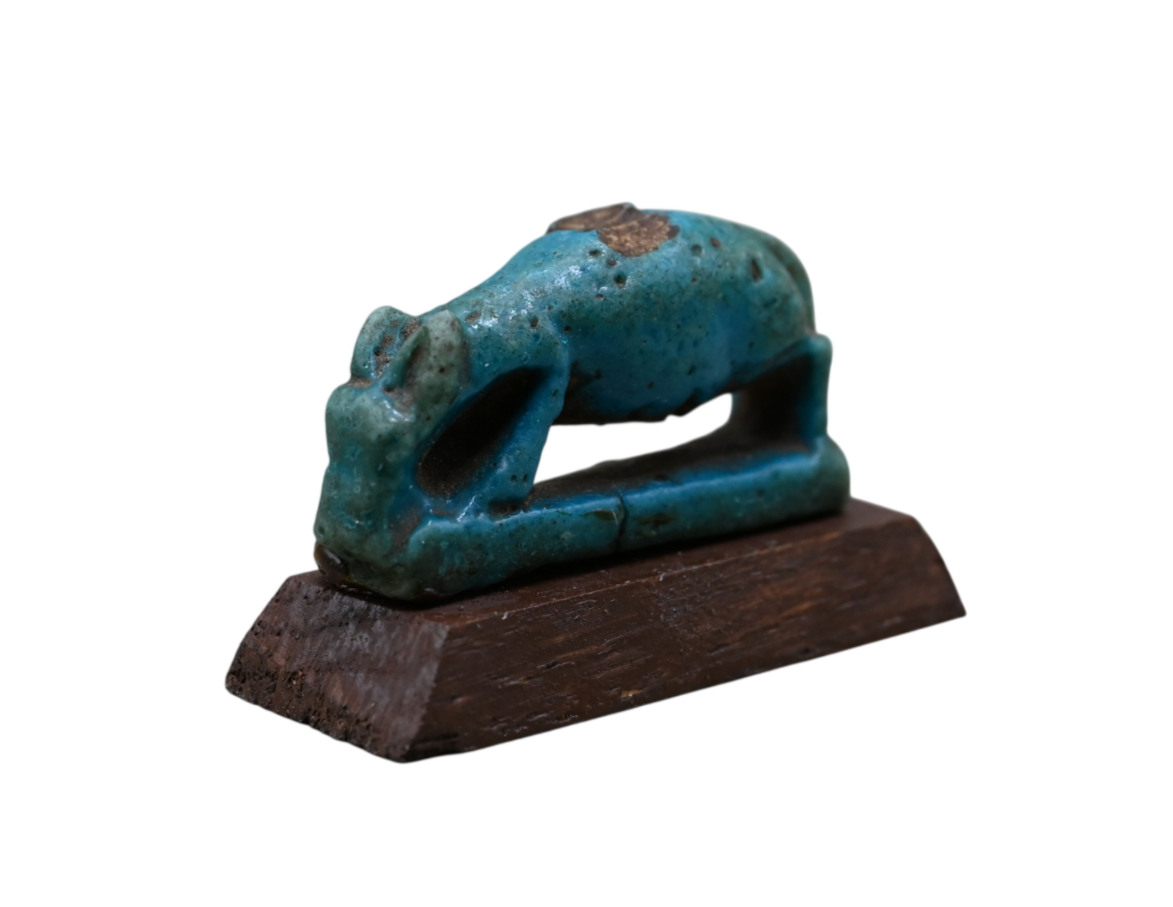
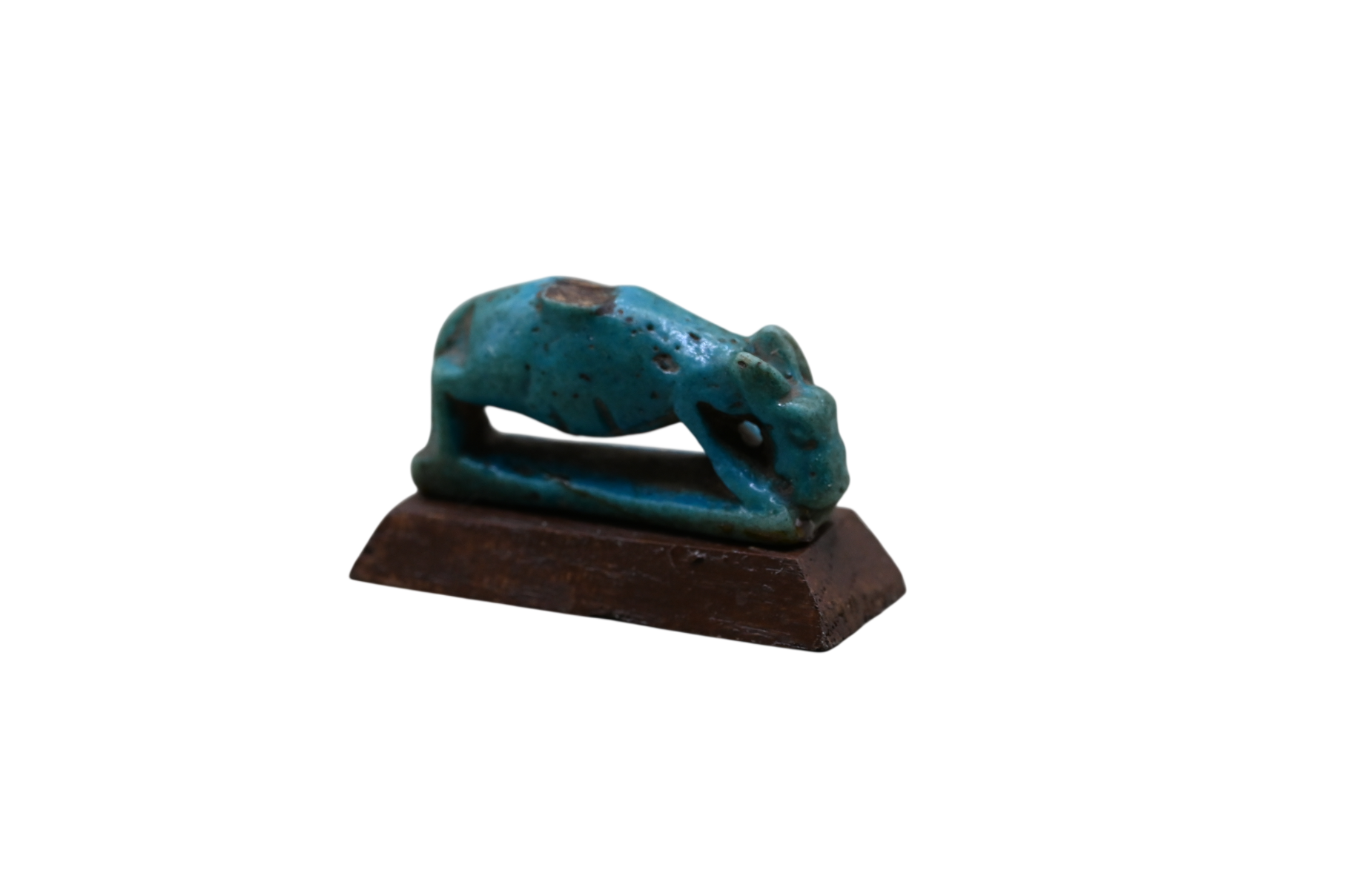
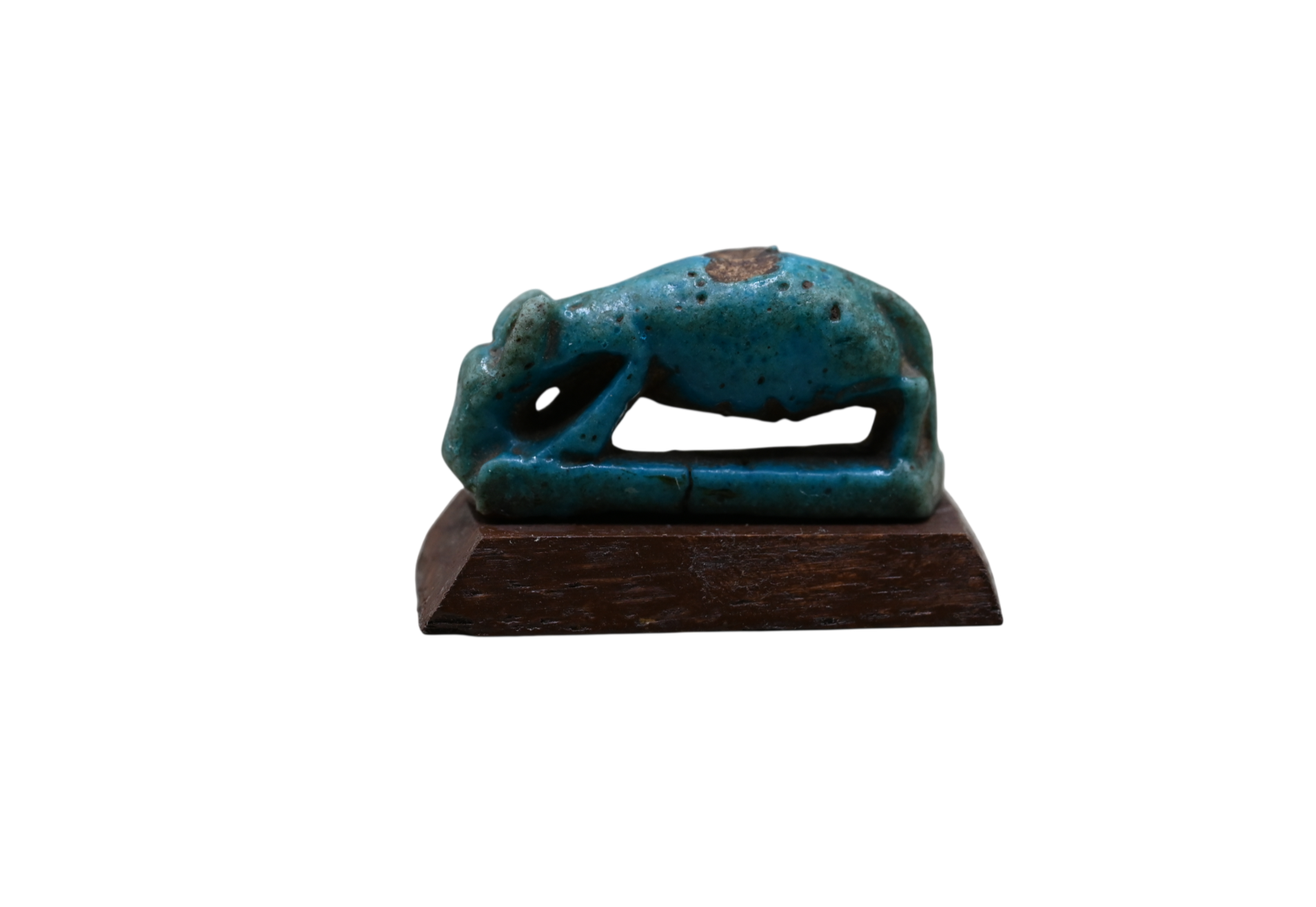
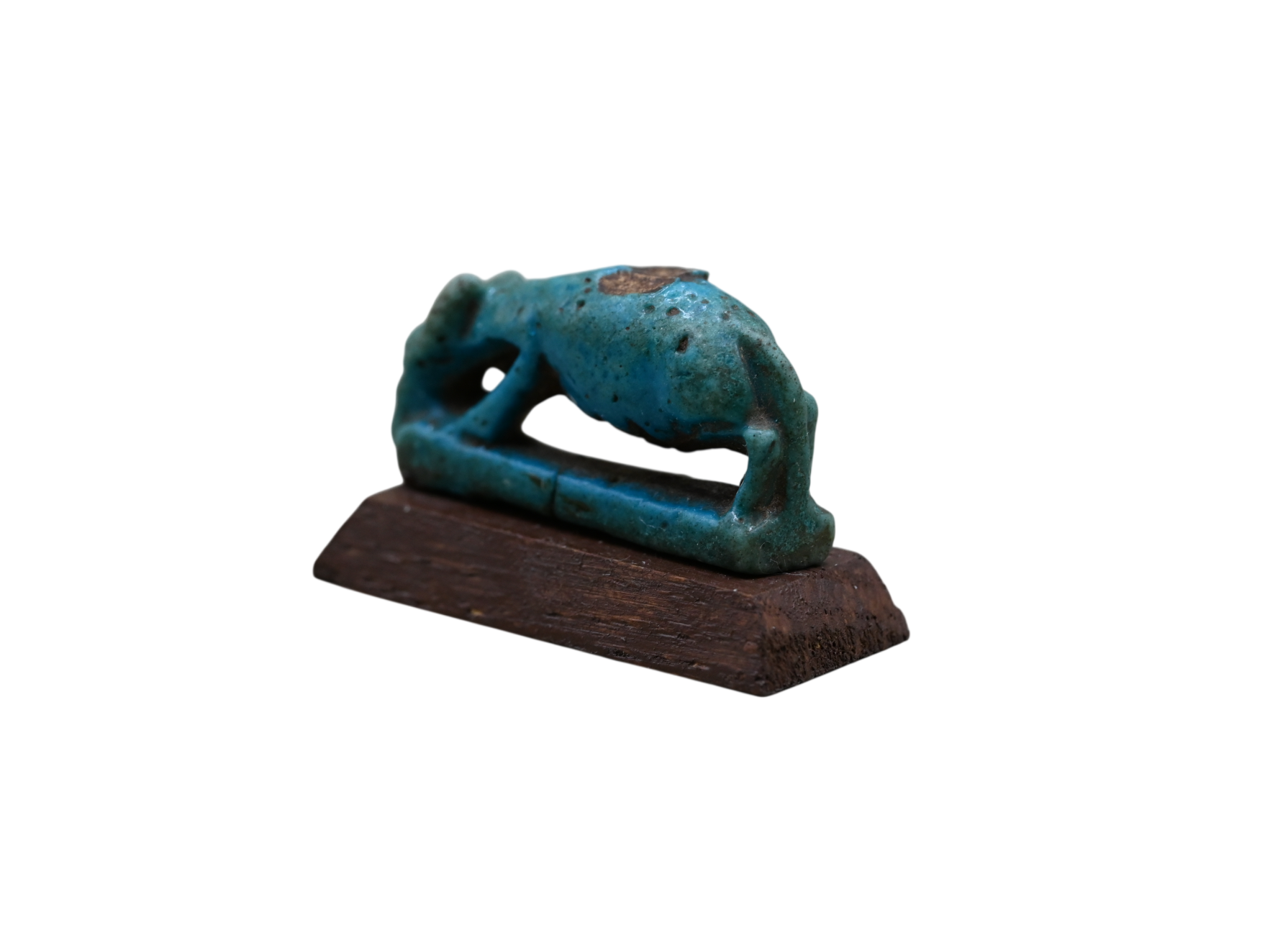
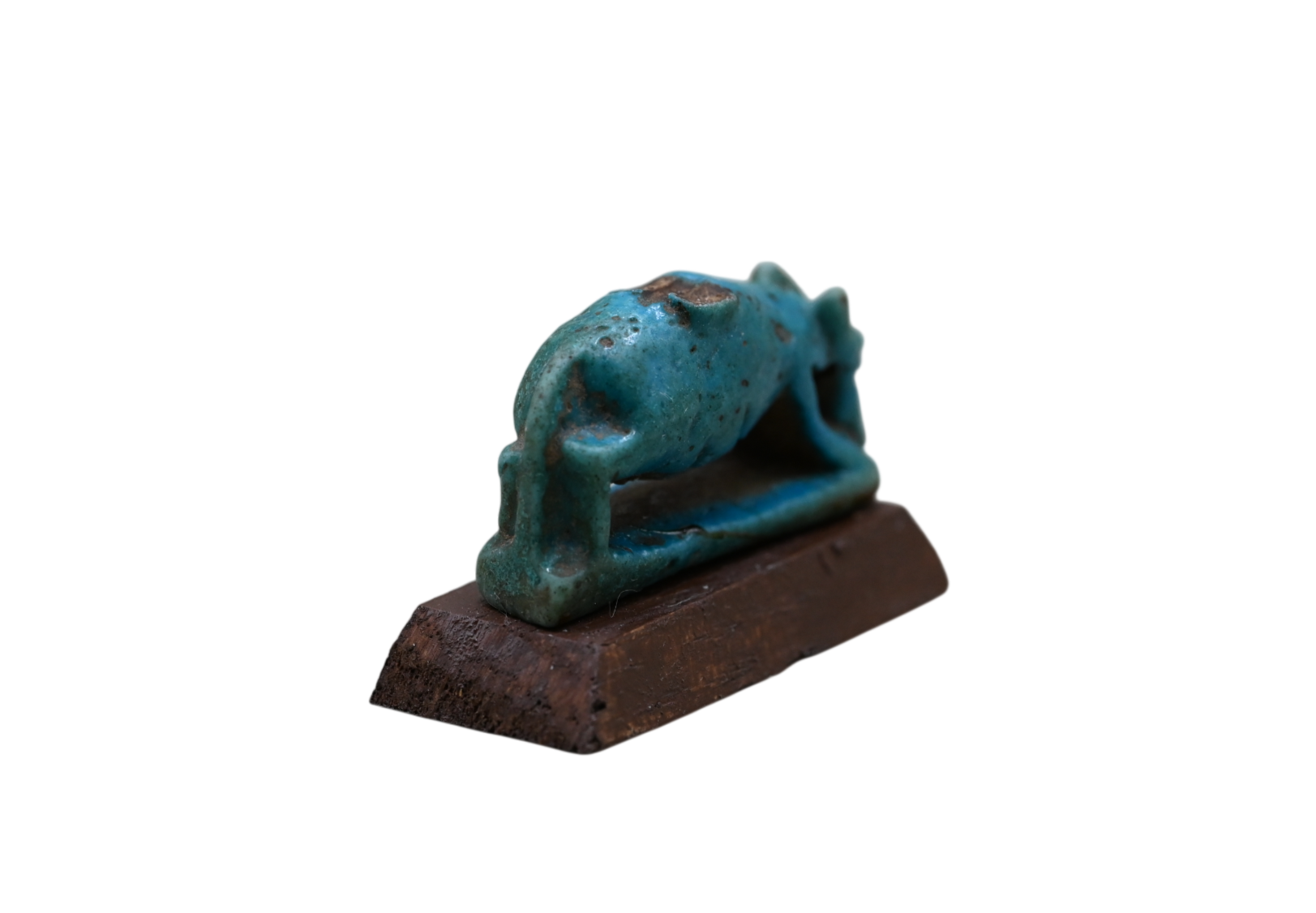
Blue faience sow amulet
Price
€ 750
Description
A small but fine blue faience pendant of a sow. Head reaching low, ears back and legs forward. Underside markings visible.
The sow was linked to the sky goddess Nut, who was said to bring forth the stars each night and consume them again at sunrise. Because of the animal’s tendency to eat its own young, Nut was occasionally depicted in the form of a sow. Even so, she was primarily understood as a caring and protective maternal figure. This small sow-shaped object, fitted with a loop at the top, was likely worn as an amulet meant to offer protection.
Amulets were often placed in mummy wrappings or tombs to help the deceased navigate the afterlife safely. They were thought to provide protection, restore bodily functions, and ensure rebirth.
Parallels:
https://www.metmuseum.org/art/collection/search/329776
https://www.metmuseum.org/art/collection/search/545262
https://www.metmuseum.org/art/collection/search/243772
https://collections.louvre.fr/en/ark:/53355/cl010011527
https://collections.louvre.fr/en/ark:/53355/cl010011483
https://collections.mfa.org/objects/134043/amulet-of-a-sow?ctx=c0f2dc51-5a6e-438a-908a-9cfb9f18b9cf&idx=1
https://collections.louvre.fr/en/ark:/53355/cl010012407
https://collections.louvre.fr/en/ark:/53355/cl010074309
https://www.britishmuseum.org/collection/object/Y_EA64609
Culture
Egyptian, Late period.
Dating
Circa 664-332 BC
Size
2,9 cm wide, 1,5 cm high (without base)
Provenance
Dr. Hans Halter, Swiss colecting before 1966. In EU collection since 2006.
Dutch Private Collection, acquired via Gorny & Mosch.
Published
Gorny and Mosch Catalogue auction 316, page 2.
Condition
Base has a glued break line. Sow itself appears intact, except for the missing suspension ring on its back.