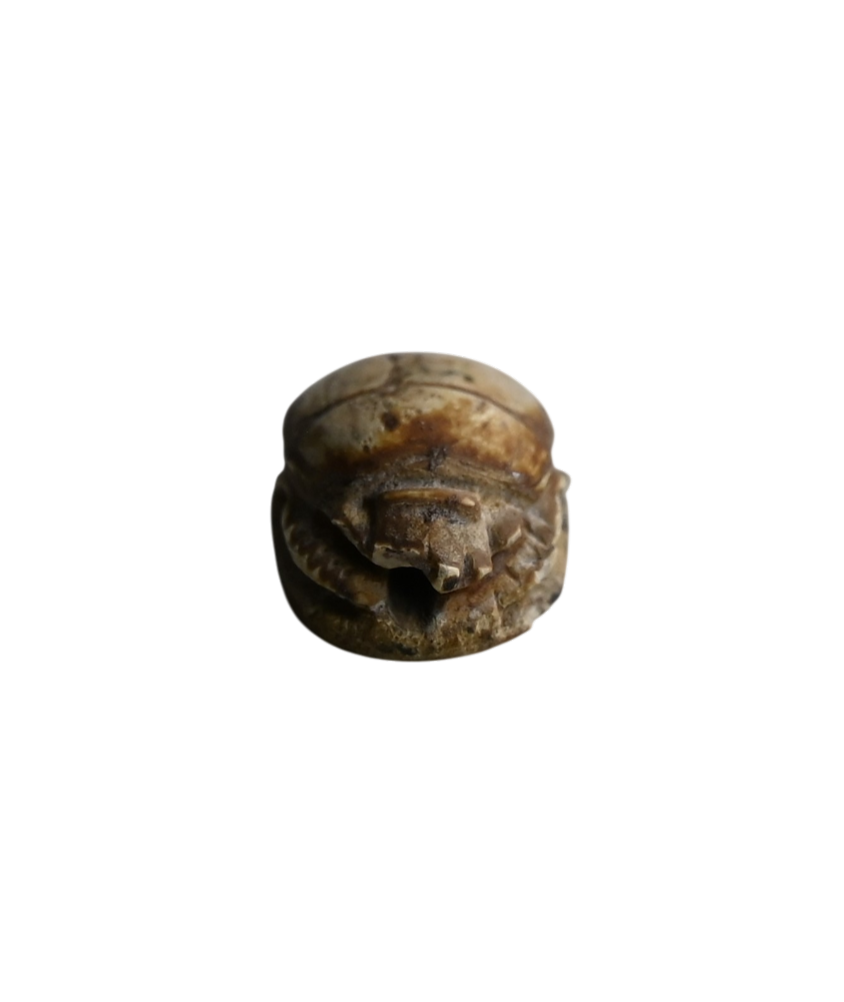
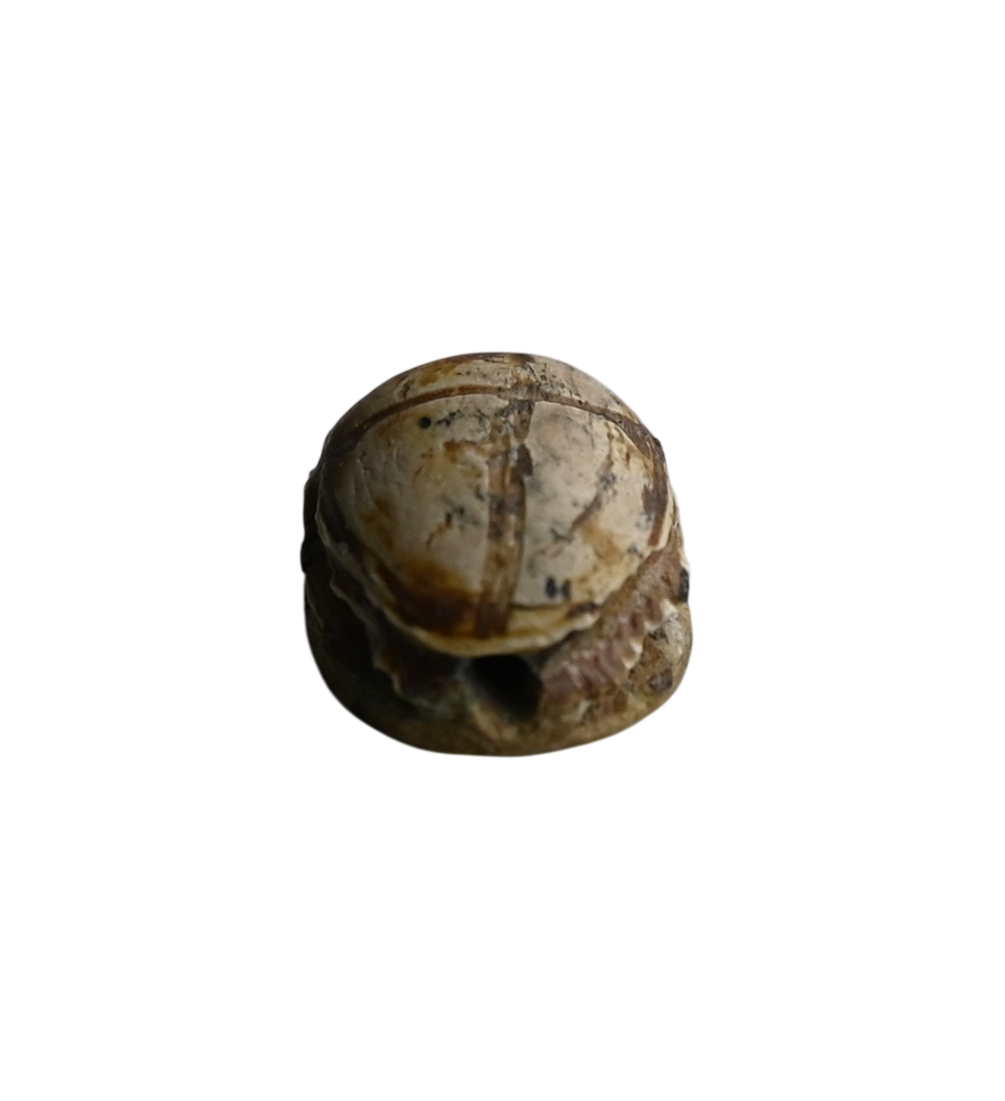
Scarab with recumbent sphinx and praise to Amun-ra
Price
€ 900
Description
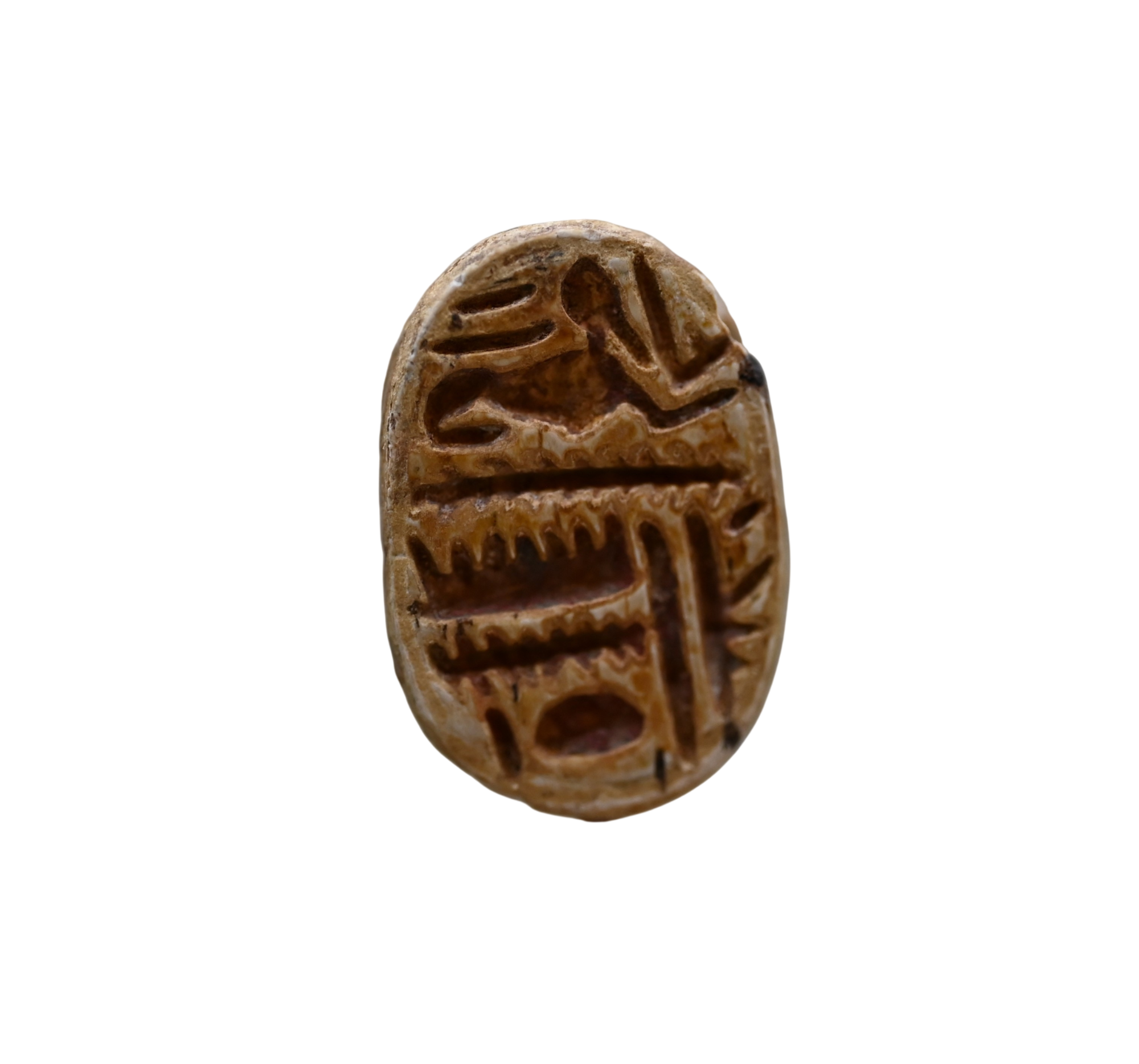
The scarab’s base shows a recumbent sphinx facing to the right, wearing a royal beard. The sphinx is one of the animals that symbolizes the king. It is holding perhaps a hes vase between its front paws, the hieroglyph for praise. In the upper left corner one can see a set of baskets (with and without handle) hieroglyphs (nb), meaning lord. Underneath the sphinx a set of hieroglyphs. It begins with a ripple of water (n), two indistinct signs, perhaps a reed and/or vertical papyrus scroll, following by a senet board (mn), ripple of water (n) and a sun disk, meaning mn-ra.
Most likely the inscription refers to a praise to Amun-Ra, king of all (gods).
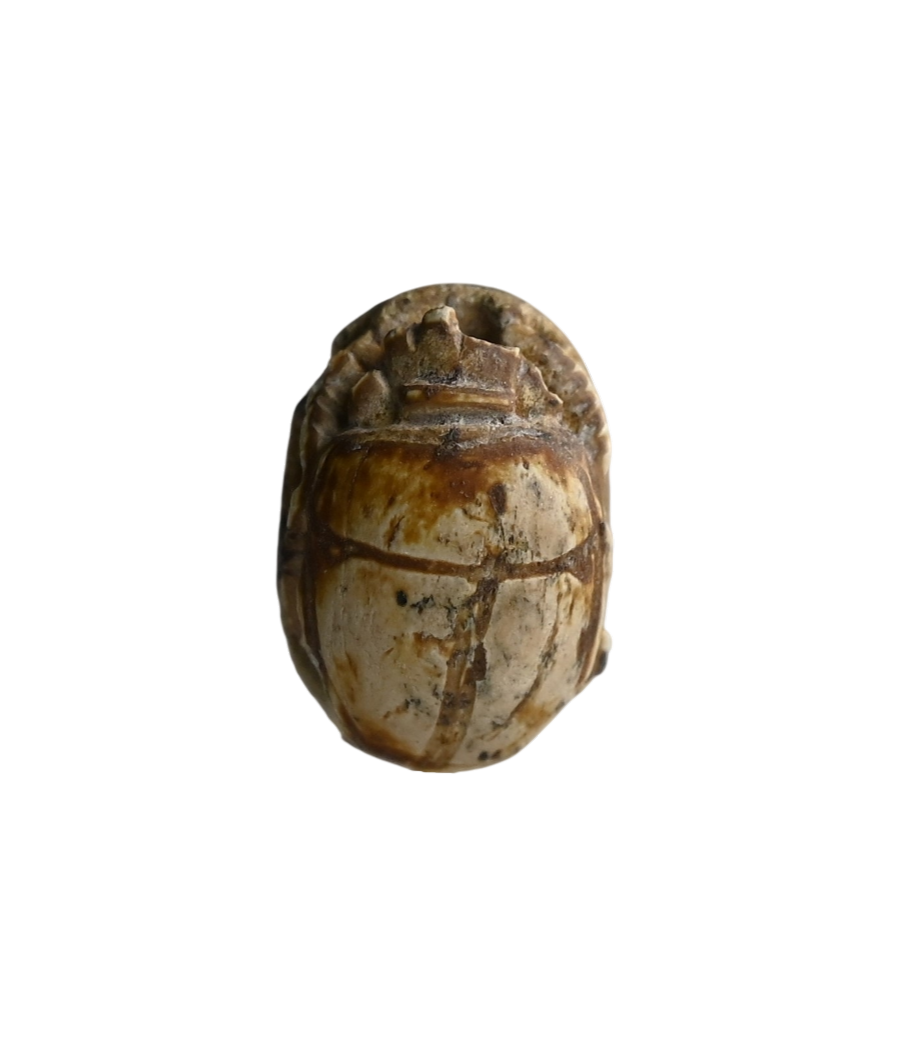
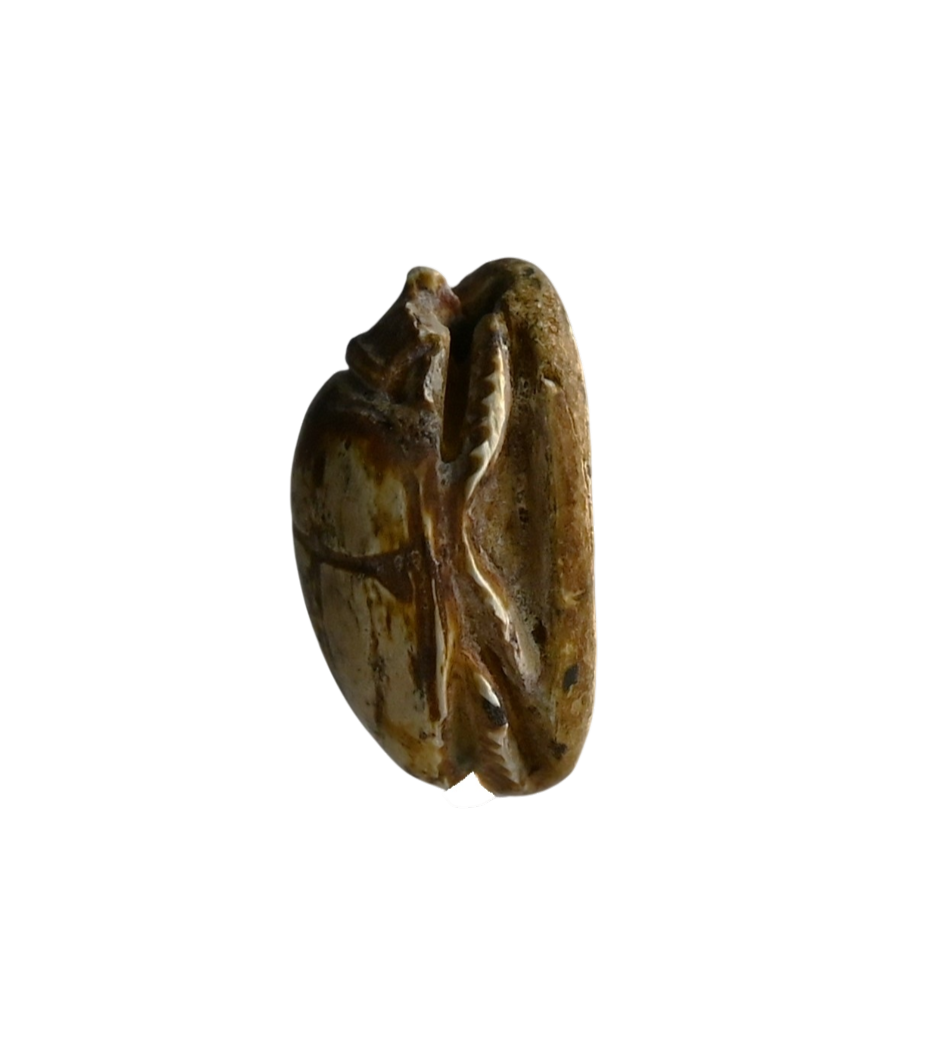
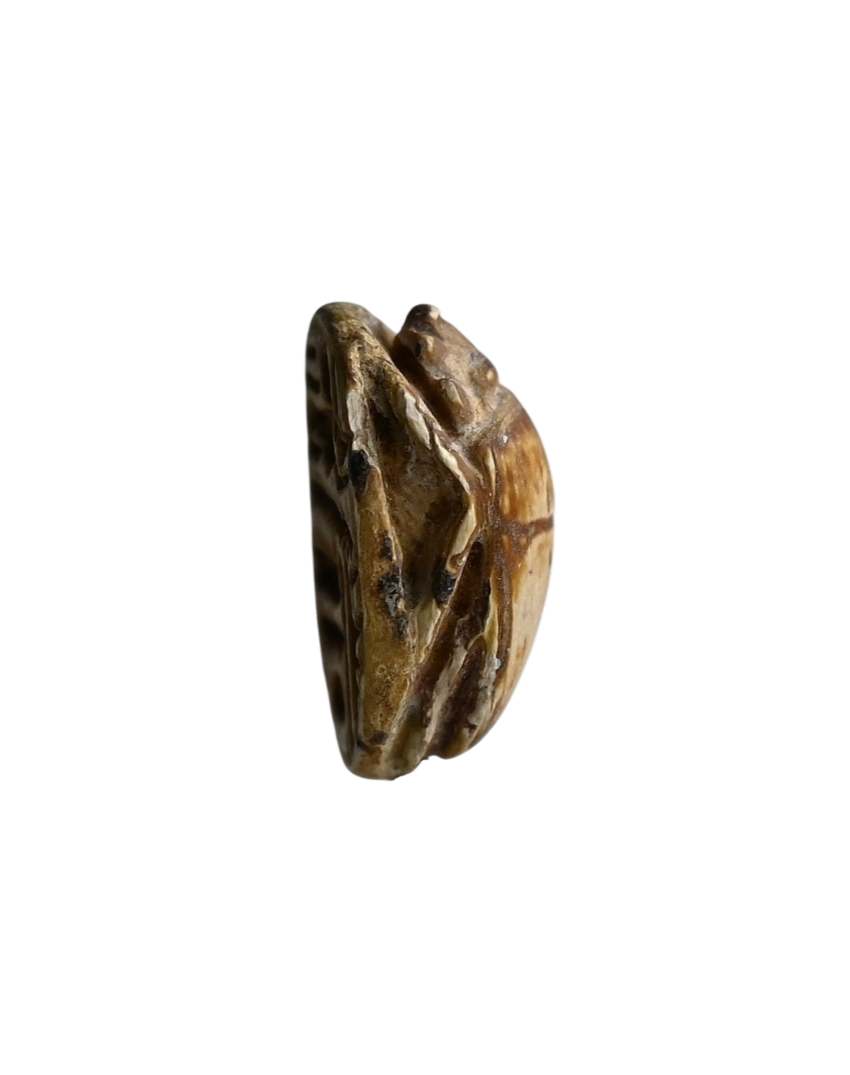
Scarabs were worn as jewelry, carried as talismans, and placed in tombs. They were believed to protect the living from harm and guide the dead safely into the afterlife. Many scarabs were inscribed with names of pharaohs, prayers, or protective spells. Officials used them as personal seals pressed into clay or wax. Some had purely decorative or symbolic inscriptions, while others carried political or diplomatic messages. They were made from a wide range of substances: steatite (soapstone), faience (glazed ceramic), carnelian, lapis lazuli, and even precious metals.
Translation (partly) available by Dutch Egyptologist Huub Pragt.
Culture
Egyptian
Dating
New Kingdom c. 1570 – c. 1069 BC
Size
1,7 cm
Provenance
Dutch private collection, bought via Bonhams Auctions in London.
Bodo Bless (1940-2022) collection, Berlin, formed from 1960s.
Condition
Excellent condition, reddish color remains inside hieroglyphs.
Including later pin.