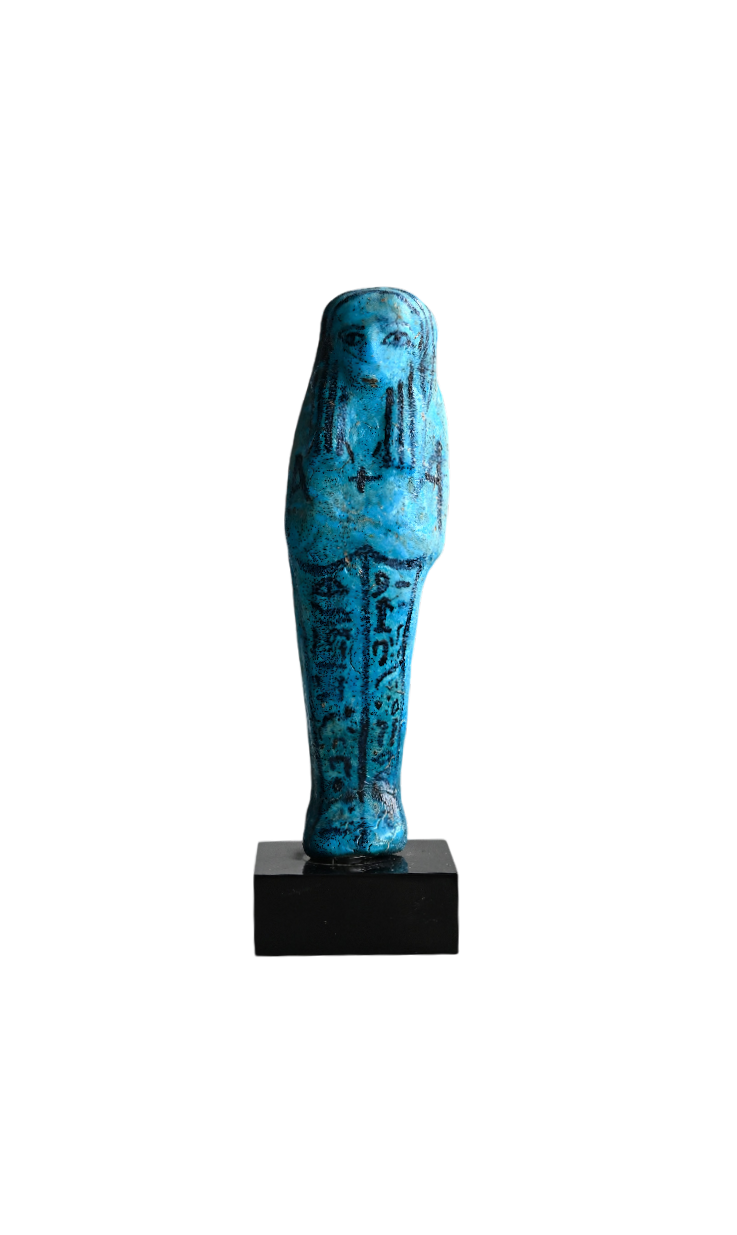
Shabti of Nesypernub
Price
€ 4750
Description
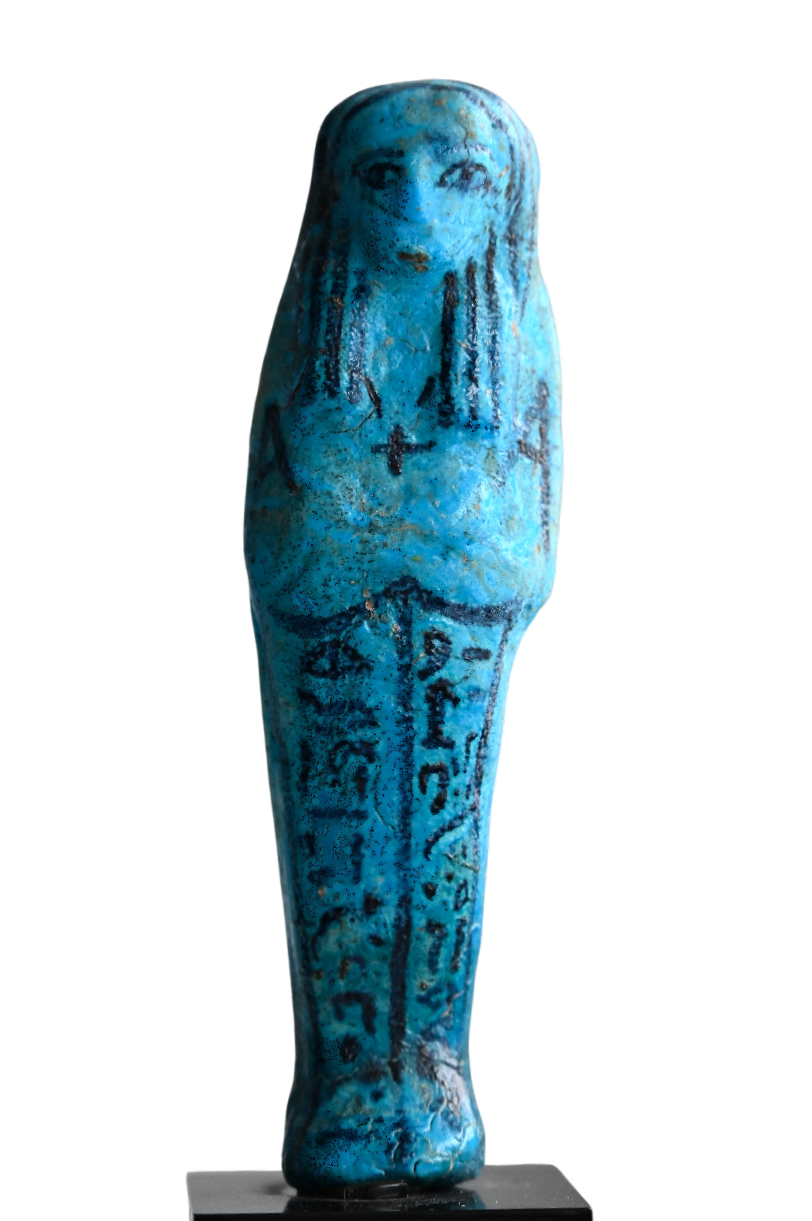
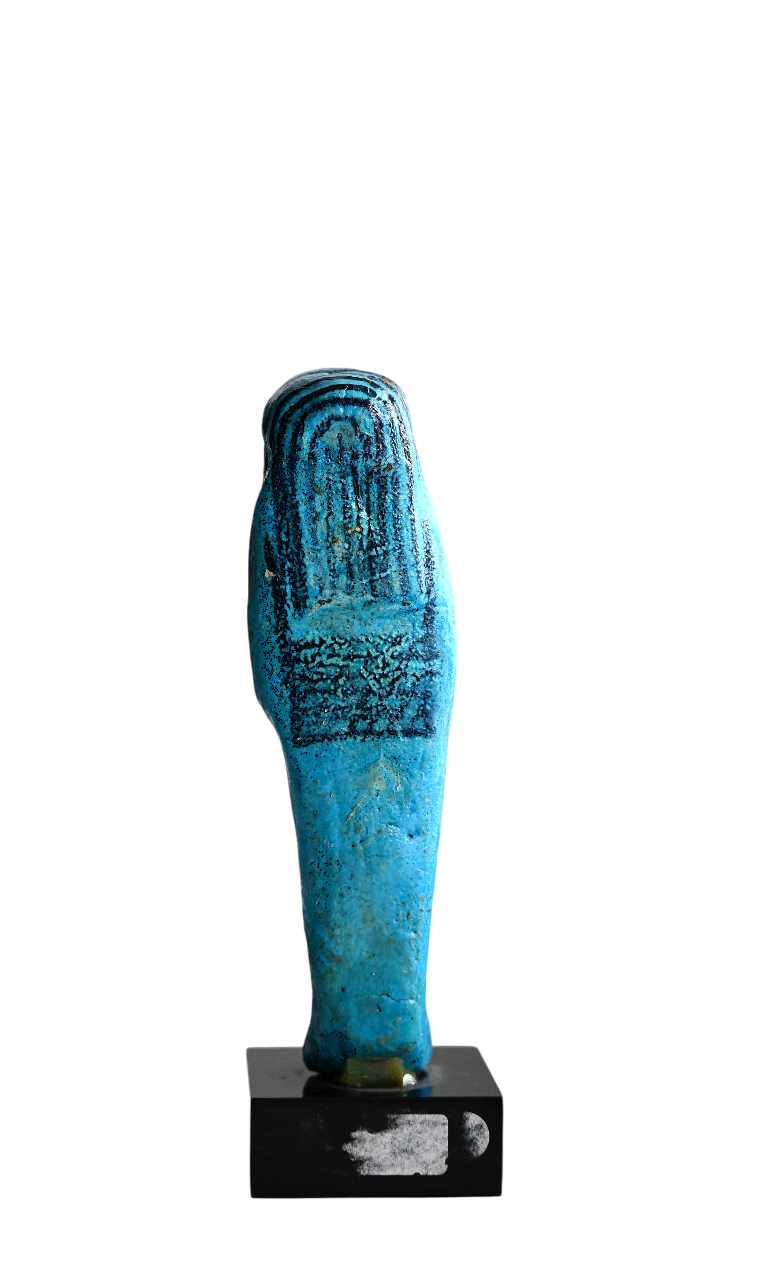
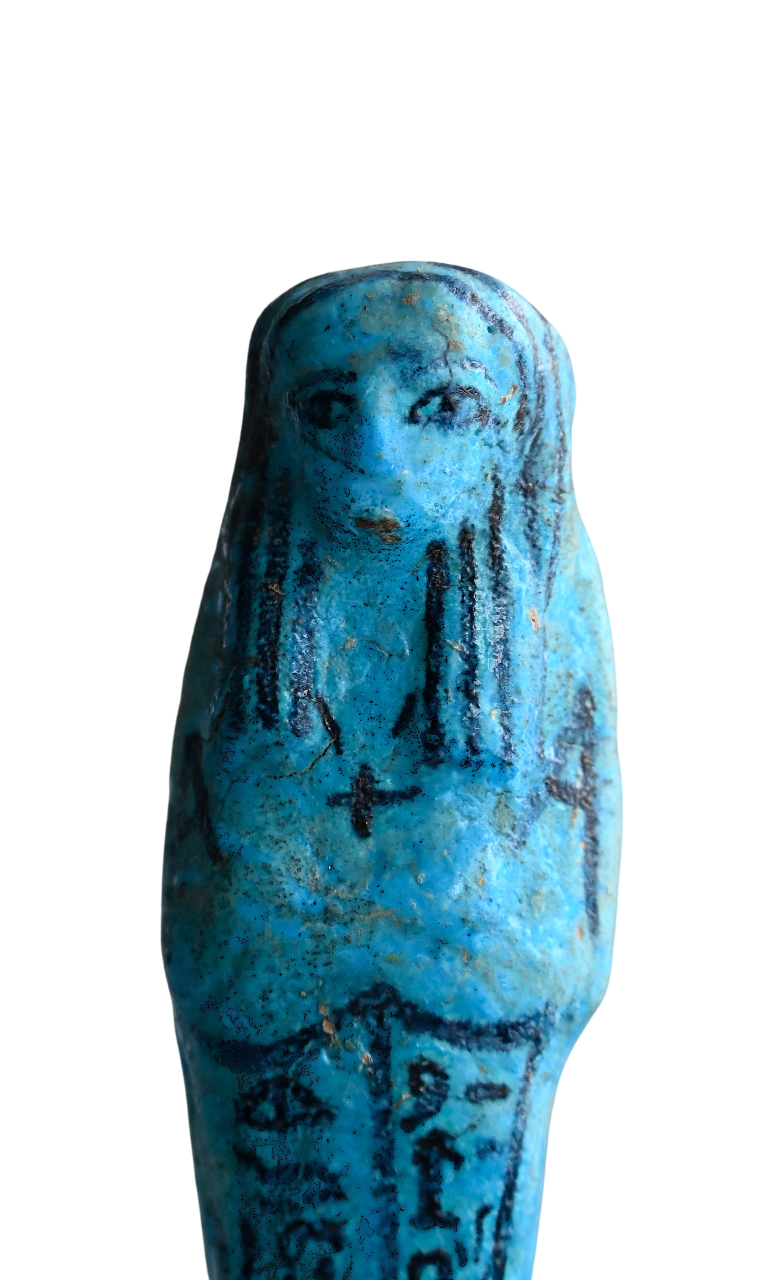
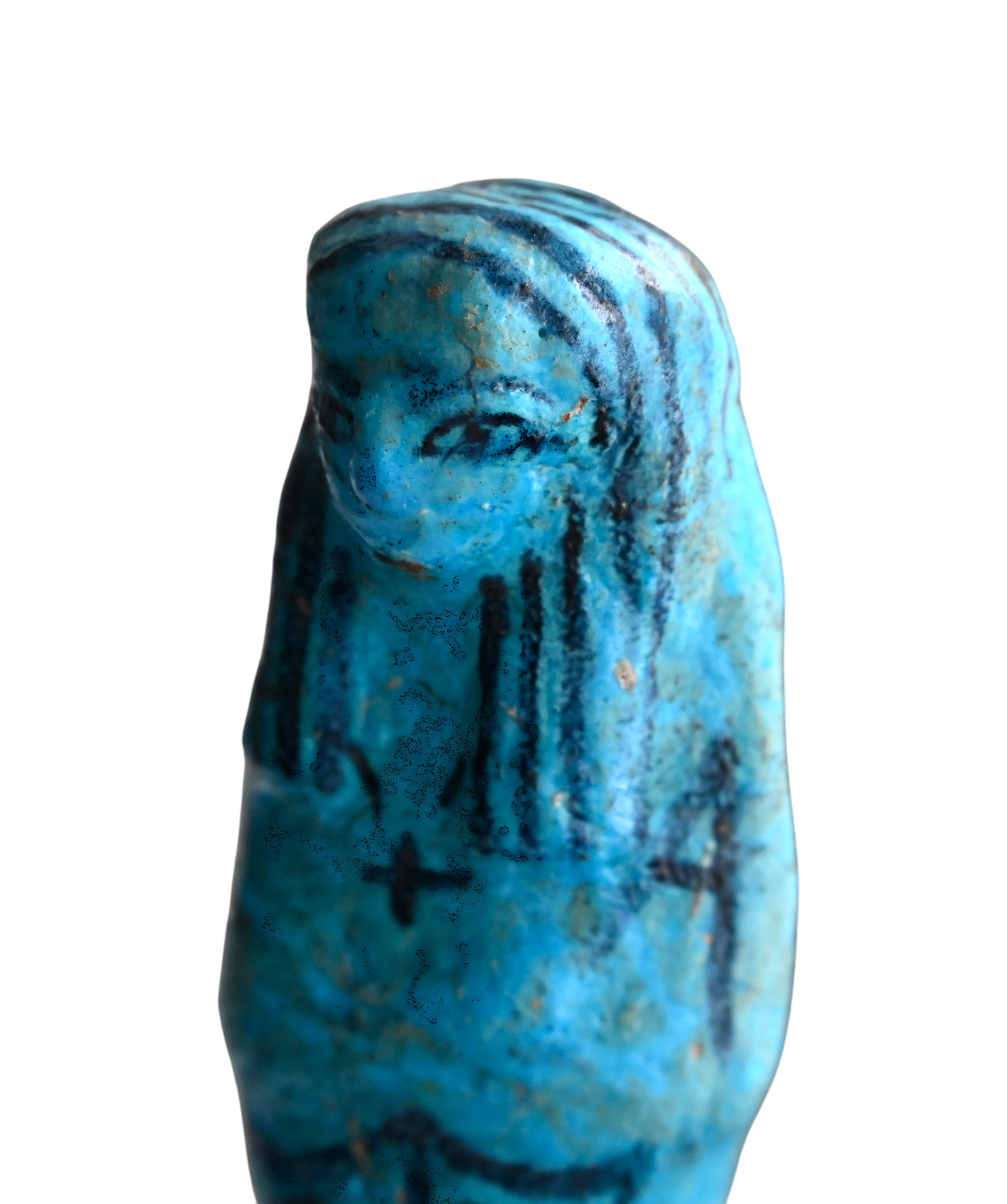
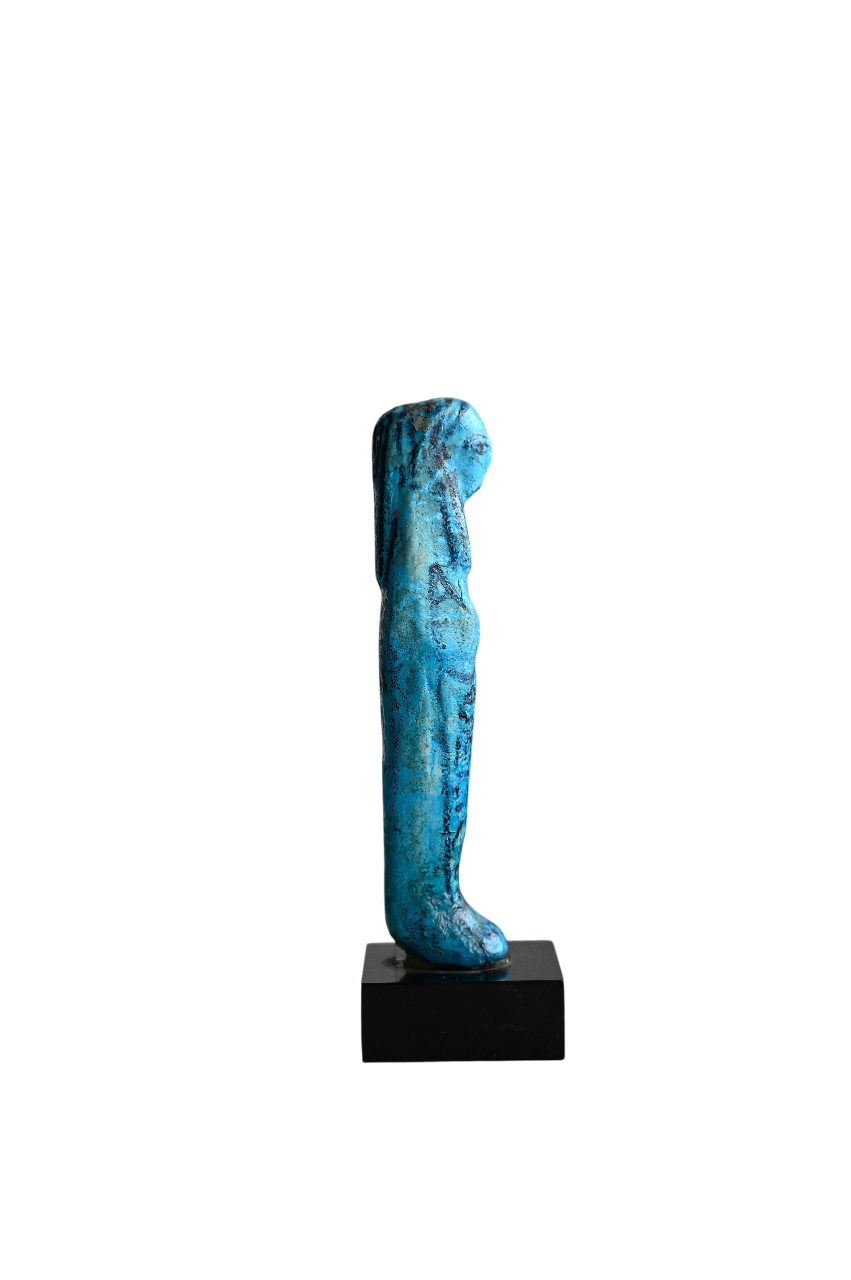
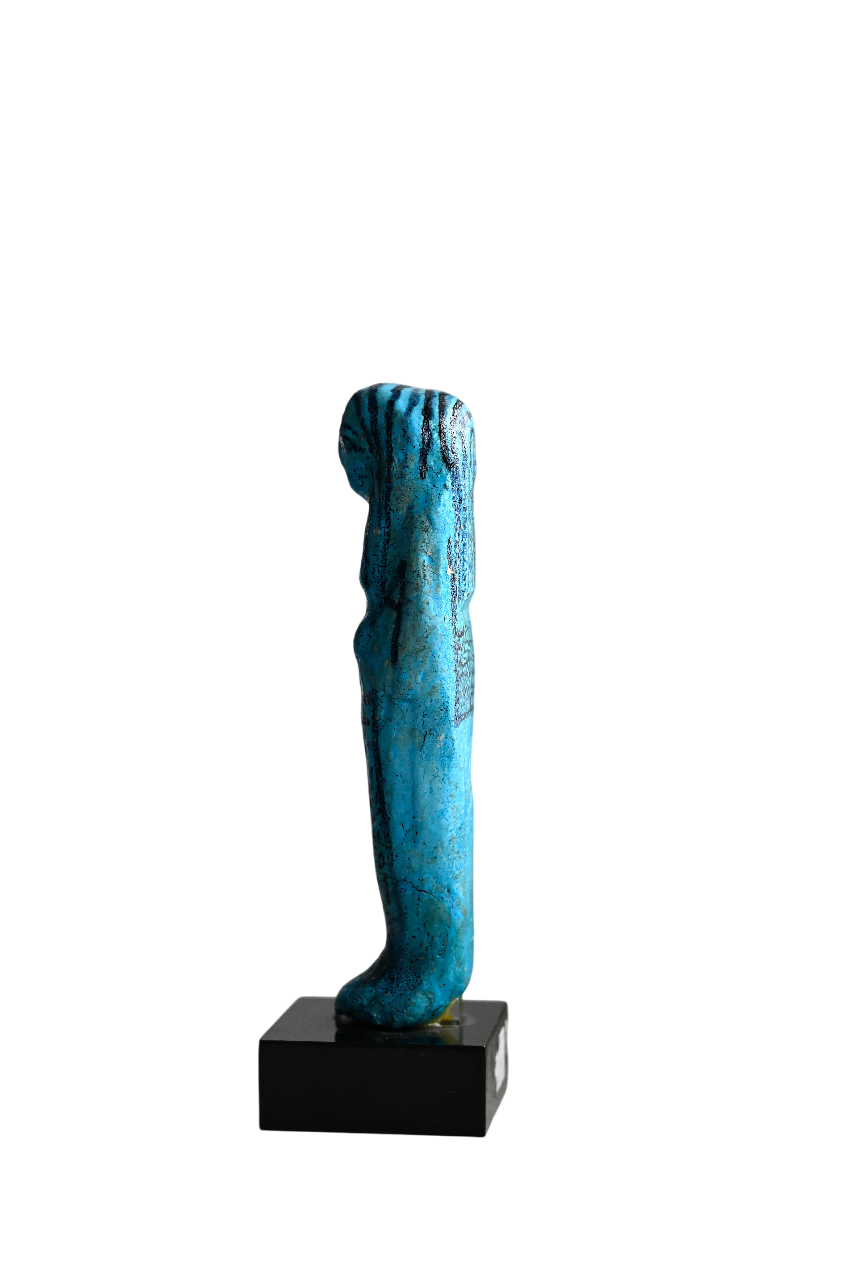
A beautiful blue faience worker shabti of Nesypernub with two vertical rows of hieroglyphs at the front. The shabti is mummiform with arms folded and holding two hoes. He wears a tripartite wig with black lines. On the back he carries a basket, suspended from two line at the shoulders. Unique is that he wears a amulet (ib) at the front.
Nesypernub was a Theban priest that lived in the 21st dynasty. The ushabti's for Nesypernub were found at the Priests of Amen Cache at Deir el-Bahari in Western Thebes. The coffin of Nesypernub is in Vienna. Unique for the shabti's of Nesypernub is that the word ushabti is written in the inscription on the shabti itself.
The hieroglyphs translate to "O, ushabti called to work in the inundation, the Osiris, the God's Father of Amen, Nesy-per-nub, justified".
Shabtis are ancient Egyptian funerary figurines meant to serve the deceased in the afterlife. Usually mummiform and made of faience, clay, wood, or stone, they often carry tools and bear hieroglyphs commanding them to do labor in the fields of Osiris, symbolizing the Egyptian vision of a continued, active life after death.
In general there are two types of shabti's: the worker and the overseer. Worker shabtis are the laborers who do the physical work in the afterlife, while overseer shabtis are their supervisors, overseeing the labor and ensuring the deceased’s needs are met. Obviously, there are more worker shabti's than overseers. Together, they form a miniature workforce, reflecting the Egyptian belief in an afterlife that mirrored earthly work structures.
Culture
Egyptian
Dating
Third Intermediate Period, late 21st Dynasty, 1077 BC to 943 BC.
Size
14,5 cm without stand.
Provenance
Dutch collection.
Ifergan Gallery Ancient Art, Malaga Spain from 2014 - 2021.
Classical Archaeology F. Cervera, Spain, until 2014.
Private Collection C.R, France.
Millon & Associés 2007 auction, lot 4.
Publications
The shabtis of Nesy-per-nub, Niek de Haan and Patrice Renaut, second edition 2021, page 86.
Egipto Magico catalogue, page 92.
Millon & Associés, catalogue june 2007 Archeology, page 5, lot 4.
Textual reference in The Amasis Collection of Glenn James, page 99, reference number 32.
Exhibited
Ifergan Collection, Málaga, Spain (2018-2020). Pictures available of exhibit.
Condition
Great condition.